
Where to stay
Weligama, Ahangama or Hiriketiya?
The first wave you catch in Weligama will not be a big one. It will be waist-high, slow and forgiving, and you will ride it all the way to the sand with someone on the beach shouting your name. That is what this bay is for.
Weligama is having a moment. HomeToGo’s 2026 travel forecast put it first in its “Seaside Slowdown” category, with searches up 223 percent in a year. But Weligama is only one of three towns on this stretch of coast, and for many people it is not the right one. Ahangama, fifteen minutes west, is where the small, stylish hotels are. Hiriketiya, an hour east, is the cove everyone talks about after they have left.
Here is how to choose, and where to sleep in each.
The short answer
Learn to surf in Weligama. Stay in Ahangama if you want design, food and a social evening. Go to Hiriketiya for a small bay and a slower week. For a single, special hotel, Cape Weligama on its headland is in a class of its own.
Three towns, at a glance
| Town | Best for | The feel |
|---|---|---|
| Weligama | Learning to surf | A wide working bay, busy and easy-going |
| Ahangama | Design stays, cafés, reef breaks | Small hotels and villas off the main road |
| Hiriketiya | A small cove, a slow week | A horseshoe bay with a handful of stays |
The coast, west to east
The south coast runs in a line of bays from Galle Fort to Tangalle. In order: Galle, Koggala, Ahangama, Midigama, Weligama, Mirissa, Matara, Dondra, then Dickwella and Hiriketiya, with Tangalle about half an hour beyond.
Weligama is about 144 km from Colombo, two and a half to three hours on the Southern Expressway, and two to three hours from the airport depending on traffic. Galle is 30 minutes west. Ahangama is roughly two and a half hours from the airport, Hiriketiya about three. In season, Cinnamon Air also flies small planes to Koggala, about 15 km from Weligama.
Weligama: where you learn
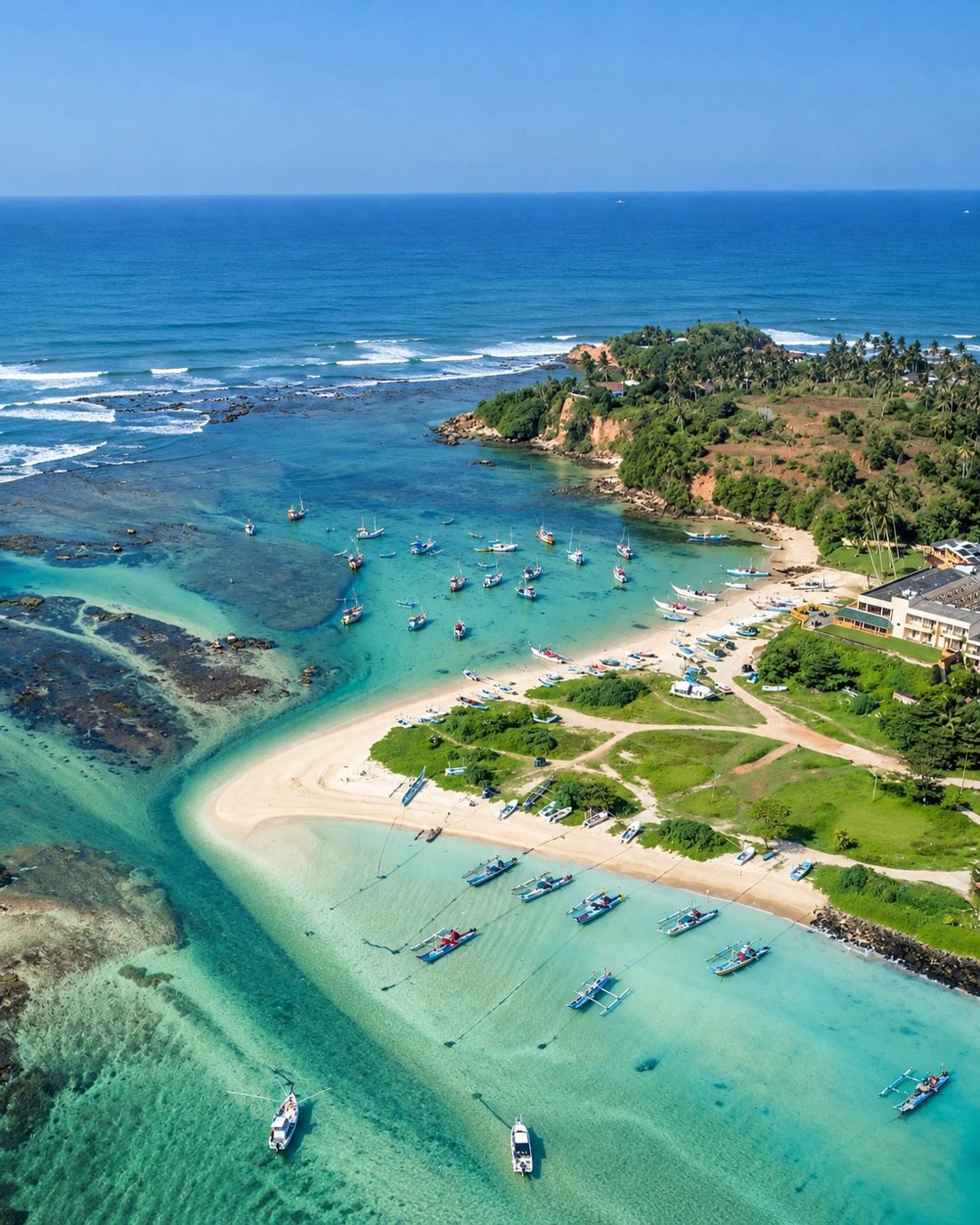
Weligama means “sandy village”, and the bay is a three-kilometre crescent of it. The waves roll in slowly over a sandy bottom, which makes this one of the best places in Asia to stand up for the first time. Surf schools line the beach, and an hour’s lesson in the morning, before the wind, is the way to do it.
The town itself is a working fishing town with a busy main road, and it is not pretty. The beach gets better away from the centre. In the middle of the bay sits Taprobane, a tiny island with a white villa built between the wars by a self-styled French count. You can wade out to it at low tide, and the house, with five bedrooms, can be rented whole.
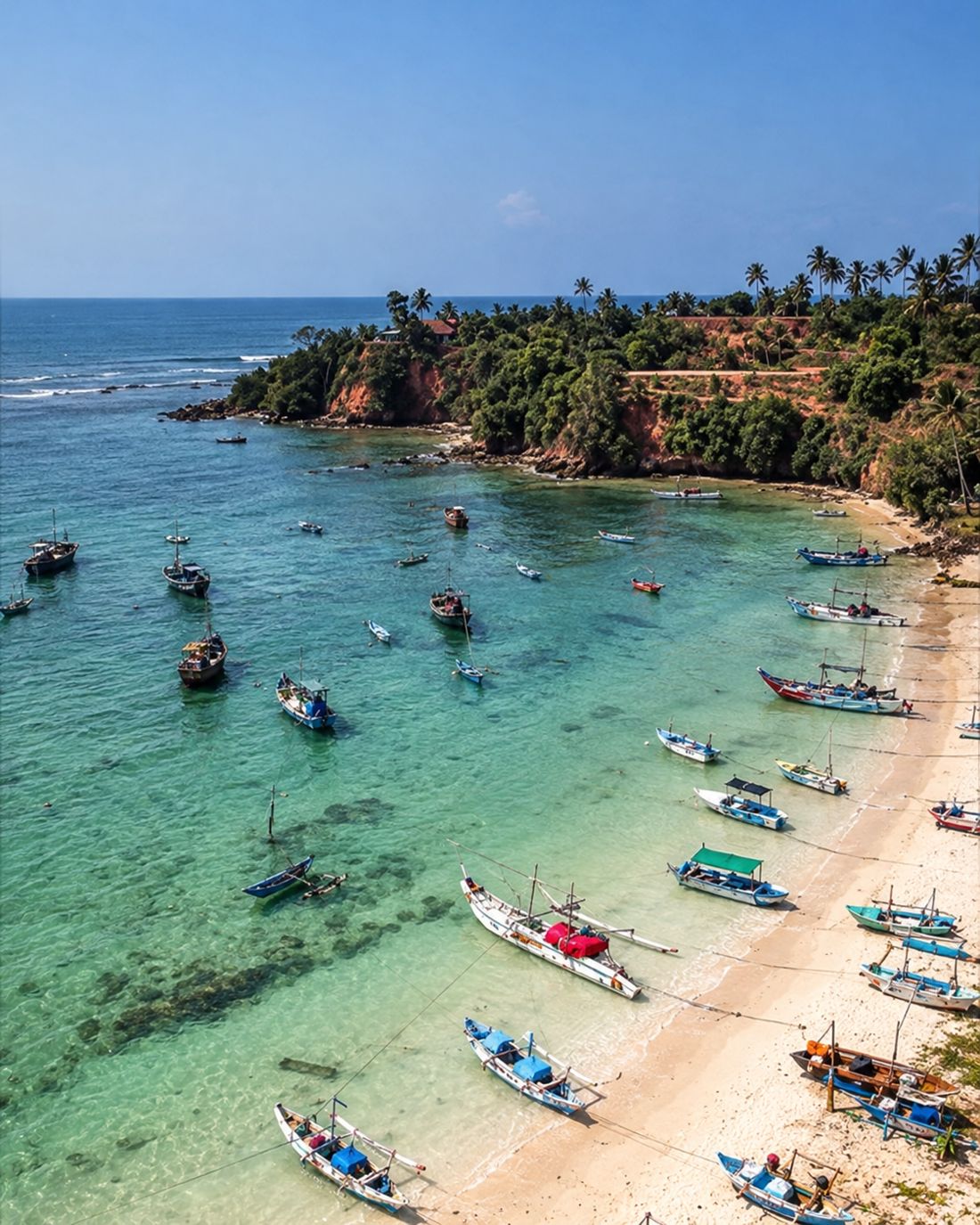
The waves roll in slowly over a sandy bottom. This is one of the best places in Asia to stand up for the first time.
Where to stay. Cape Weligama is the grand hotel of this stretch: 39 villas and suites on twelve acres of headland above the bay, a Relais & Châteaux member, with a crescent “Moon Pool” about 60 metres long (for guests twelve and over). It is the place for an occasion. W15 is a smaller sea-view hotel with a pool on the main road. The Weligama Bay Marriott, a 200-room high-rise, is the big-resort option, useful for points and families, but not why you come here.
Ahangama: where you stay
Ahangama has no single beach to speak of. What it has is a run of small hotels, villas and guesthouses tucked behind the main road, a stretch of cafés, rooftop bars and a French bistro, and reef breaks with names like Marshmallows and Sticks for surfers who have moved past the beginner bay. Yoga shalas sit at the edge of the paddy fields. This is the stretch of coast people move to for a winter.
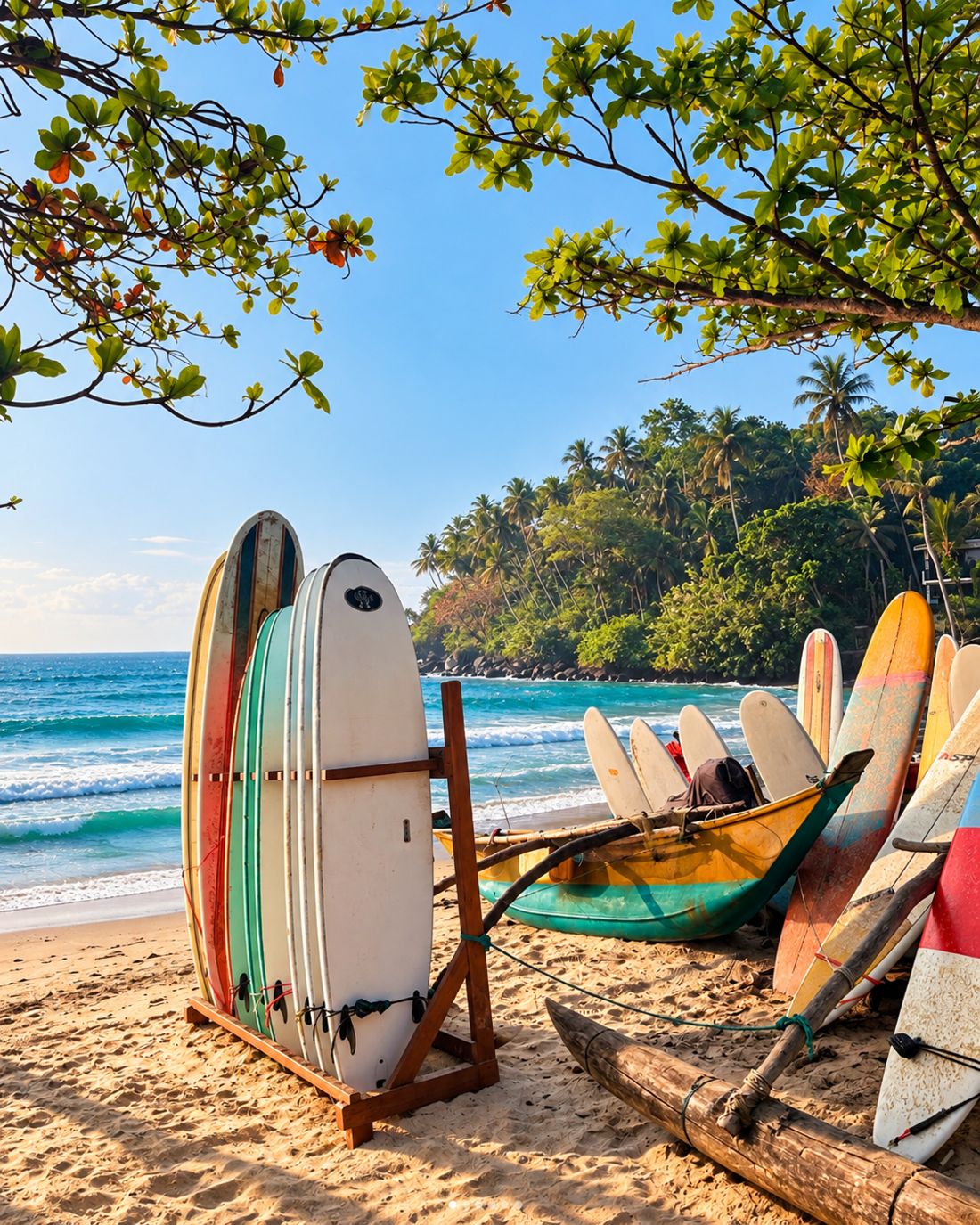
Where to stay. Casa Tikiri has seven rooms and is for adults only. Tekanda Lodge has six thatched rooms and cabanas above Koggala Lake, with yoga and Ayurveda on request. The Sandhya and Trebartha East are among the most considered small stays on the coast, and Abode by the Beach has just two suites and a good kitchen. Most are small, so book well ahead for December to March.
Hiriketiya: the cove
Hiriketiya is a small horseshoe bay past Matara and Dondra Point, and the reason people drive the extra hour. A left-hand wave breaks along one side of the bay, strong enough for confident surfers on a good day, with gentler water for beginners. Watch for coral near the shore. Evenings are a handful of bay-front restaurants, and on some nights, a party.
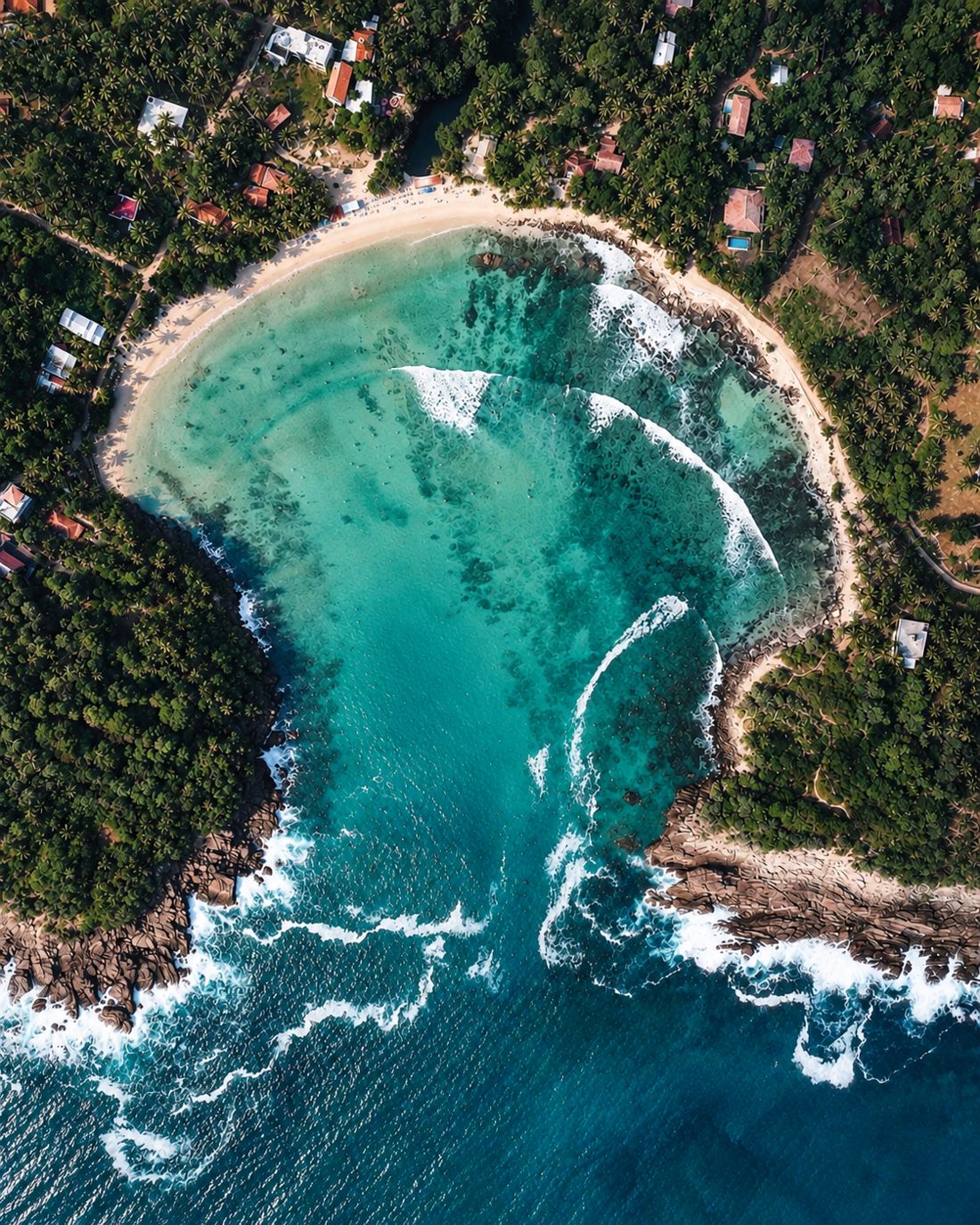
Where to stay. Salt House has eight rooms with open-air bathrooms, a pool and a yoga shala in the treetops, a minute’s walk from the sand. Most stays here are small villas and guesthouses on the hill above the bay. Tangalle, half an hour further east, has some of the island’s best quiet beach hotels if you want more space. Tangalle →
When to come
The season on this coast runs from November to April. December to March is best: dry, sunny, and the most consistent, gentle surf. From May to October the southwest monsoon brings rough seas and rain, and most surf schools and whale boats stop. Swim only where it is calm, and ask your hotel which beaches are safe that day.
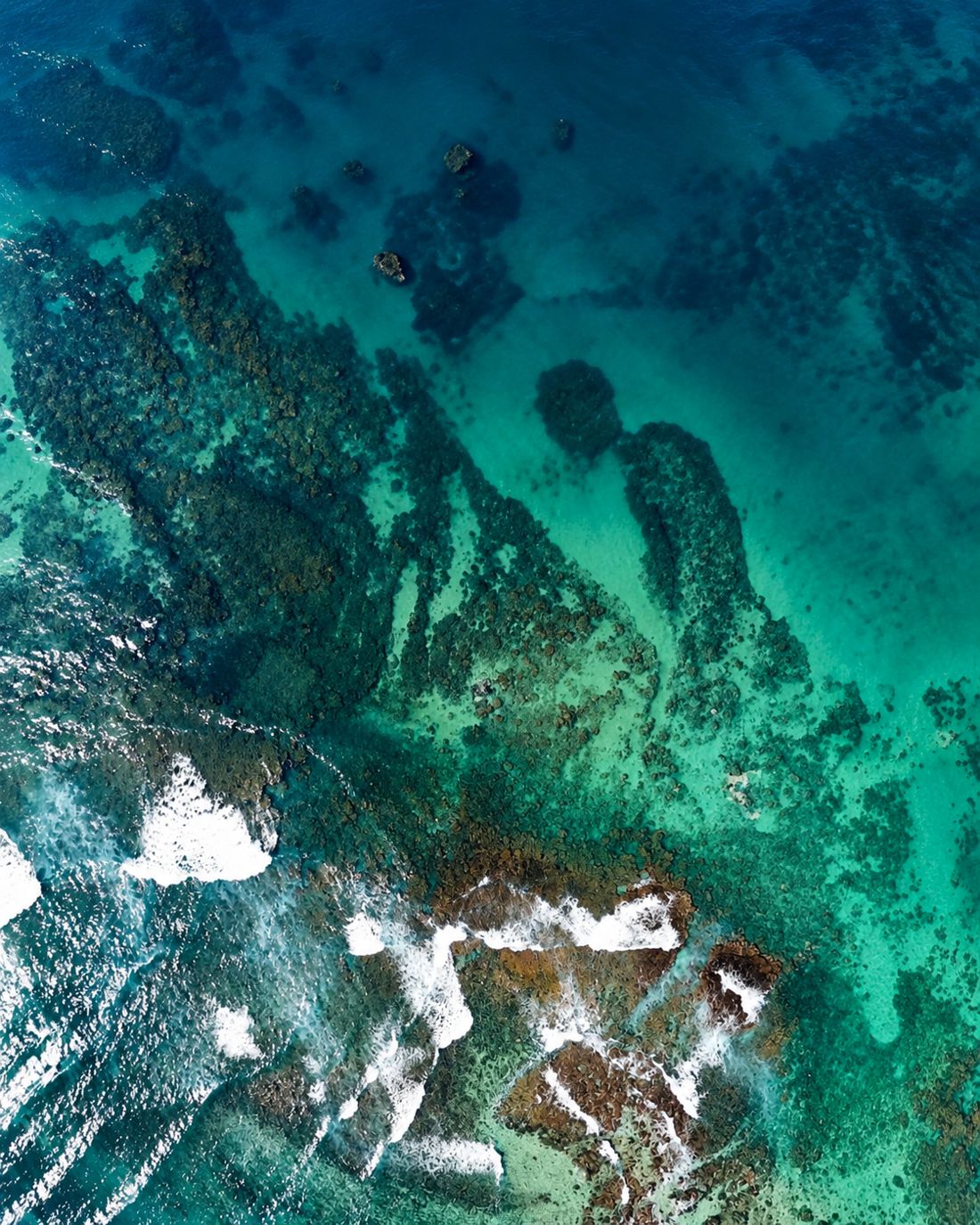
The south coast, month by month
| Months | Sea | Plan |
|---|---|---|
| Nov | Settling down | Early season, quieter, good value |
| Dec–Mar | Calm, clear, consistent surf | Peak season. Book early. |
| Apr | Still good | The season ends. Hot. |
| May–Oct | Rough, monsoon swell | Go to the east coast instead |
Whales, from the next bay
Mirissa is the next bay east of Weligama, and its harbour is where the whale boats leave, from November to April, at six or seven in the morning, for three to five hours at sea. The best months for blue whales are December to March. Choose an operator that keeps its distance from the whales and does not chase them. Whale watching in Mirissa →
About the stilt fishermen
You will see them on the reef near Koggala and Weligama, perched on poles above the water. Stilt fishing is real: it began around the Second World War, when food was short. But most of what you see by the road now is staged for photographs, and the men will ask for money. If you want the picture, agree a price first. If you want the real thing, ask your driver to take you out at dawn, when the fishing is done for fish.
Most of what you see by the road is staged for photographs. If you want the picture, agree a price first.
What is changing
In February 2026, IHCL signed a Taj in Weligama: 220 keys, including 80 apartments, with no opening date yet. The coast is getting busier, and the small places will fill first. Cyclone Ditwah in late 2025 did most of its damage in the hill country and inland districts, and the south coast was open as normal within days.
How many nights
Three nights is the minimum to settle in. Five is better, with a surf lesson most mornings and a day trip to Galle Fort. Weligama, Ahangama and Hiriketiya are an easy pairing with Galle on the same trip, and with Yala to the east. Where to stay in Galle Fort →
The Pearl Edition designs the route. Our licensed travel partner in Sri Lanka, Traumland Tours, quotes and arranges the trip. How trips work →
Questions
Is Weligama or Ahangama better?
Weligama is better for learning to surf, with a wide, gentle bay and surf schools on the sand. Ahangama is better for a stylish stay: small design-led hotels and villas, a café and rooftop-bar scene, and reef breaks for surfers who already stand up.
Is Hiriketiya worth it?
Yes, if you want a small, sheltered surf cove with a handful of boutique stays and a laid-back evening scene. It is about three hours from Colombo, beyond Matara, so it suits a stay of three nights or more rather than a stop.
When is the surf season in Weligama?
November to April, with the most consistent, beginner-friendly waves from December to March. From May to October the southwest monsoon makes the sea rough on this coast.
How far is Weligama from Colombo airport?
Two to three hours by car, mostly on the expressways, depending on traffic. Galle is about 30 minutes west, and Mirissa is the next bay east.
Are the stilt fishermen real?
Stilt fishing is a real tradition on this coast, dating from around the Second World War. But near Koggala and Weligama much of what you see by the road is staged for photographs, and you will be asked for money.
Plan around it
Photography: The Pearl Edition library and Unsplash.

Leave a comment