
Surf
Two coasts, two seasons, one long right
There is always surf somewhere in Sri Lanka. There is never surf everywhere at once, and booking as though there is ruins trips.
The two monsoons that make this island confusing to plan are the same two that make it one of the best-value surf destinations in Asia. When one coast is blown out and rainy, the other is offshore and clean. The catch is that they are never both good, and the most common mistake is an itinerary containing Weligama and Arugam Bay.
The south and west: November to April
This is the season most visitors arrive for, and it is the friendlier of the two.
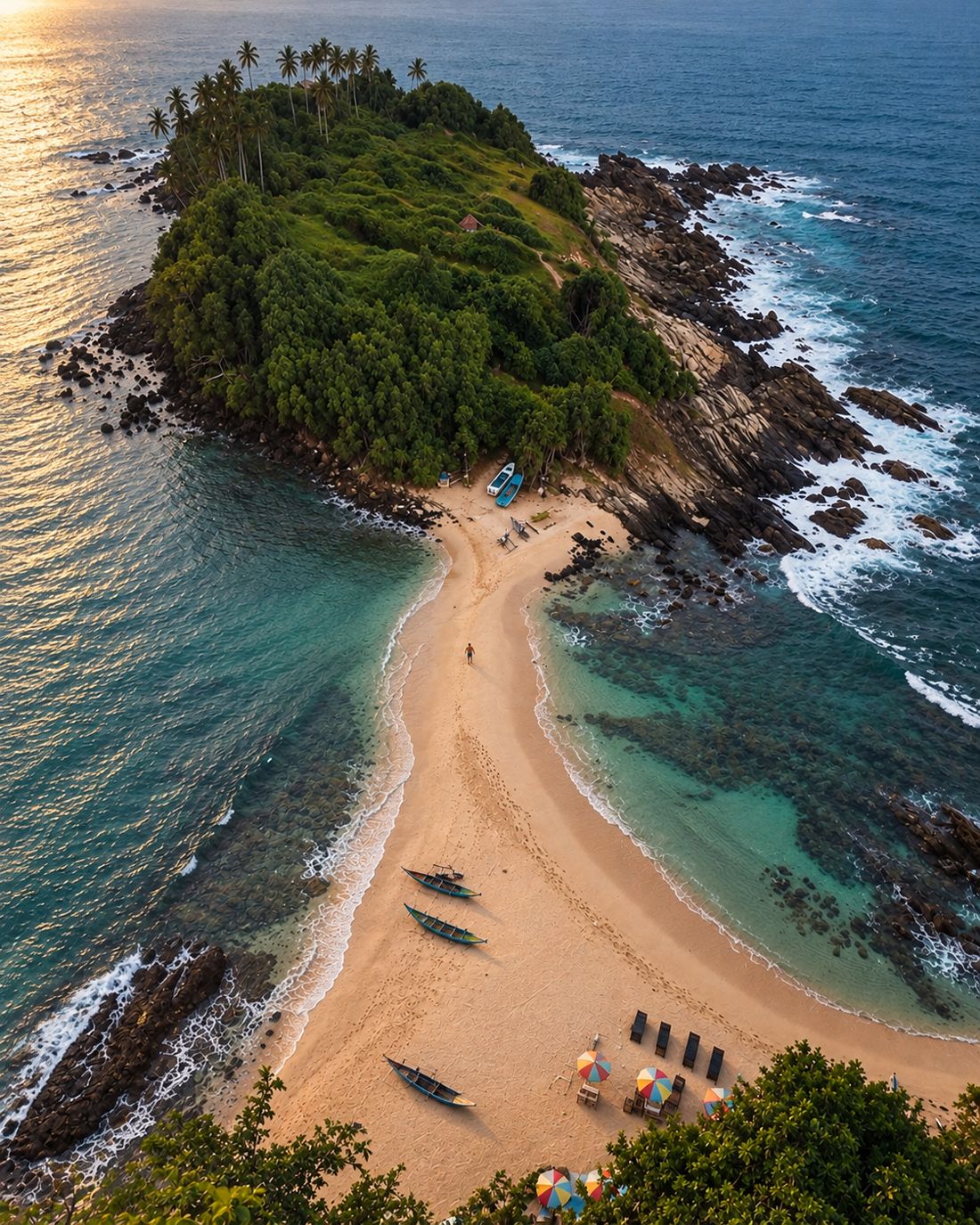
Weligama is where almost everyone in the country learns. A long sandy beach break, forgiving, waist to chest high on an average day, and lined with board hire and surf schools. It gets crowded in the way beginner beaches always do, and it is genuinely the right place to start.
Midigama, a few minutes east, is the step up. Lazy Left, Ram's Right, Coconuts — short reef breaks, punchy, with a proper reef underneath. This is where people go once they can already stand up and turn. Ahangama has spread out along the coast between them and has more of the good coffee than either.
Hikkaduwa is the old one, surfed since the seventies, still working, and busier than it was. Further round toward Galle there are quieter reefs that people are protective about, which is fair enough.
Weligama to learn. Midigama once you can turn. That progression is the whole south coast.
The east: May to September
Arugam Bay is the reason surfers come to Sri Lanka rather than somewhere else, and it earns it.
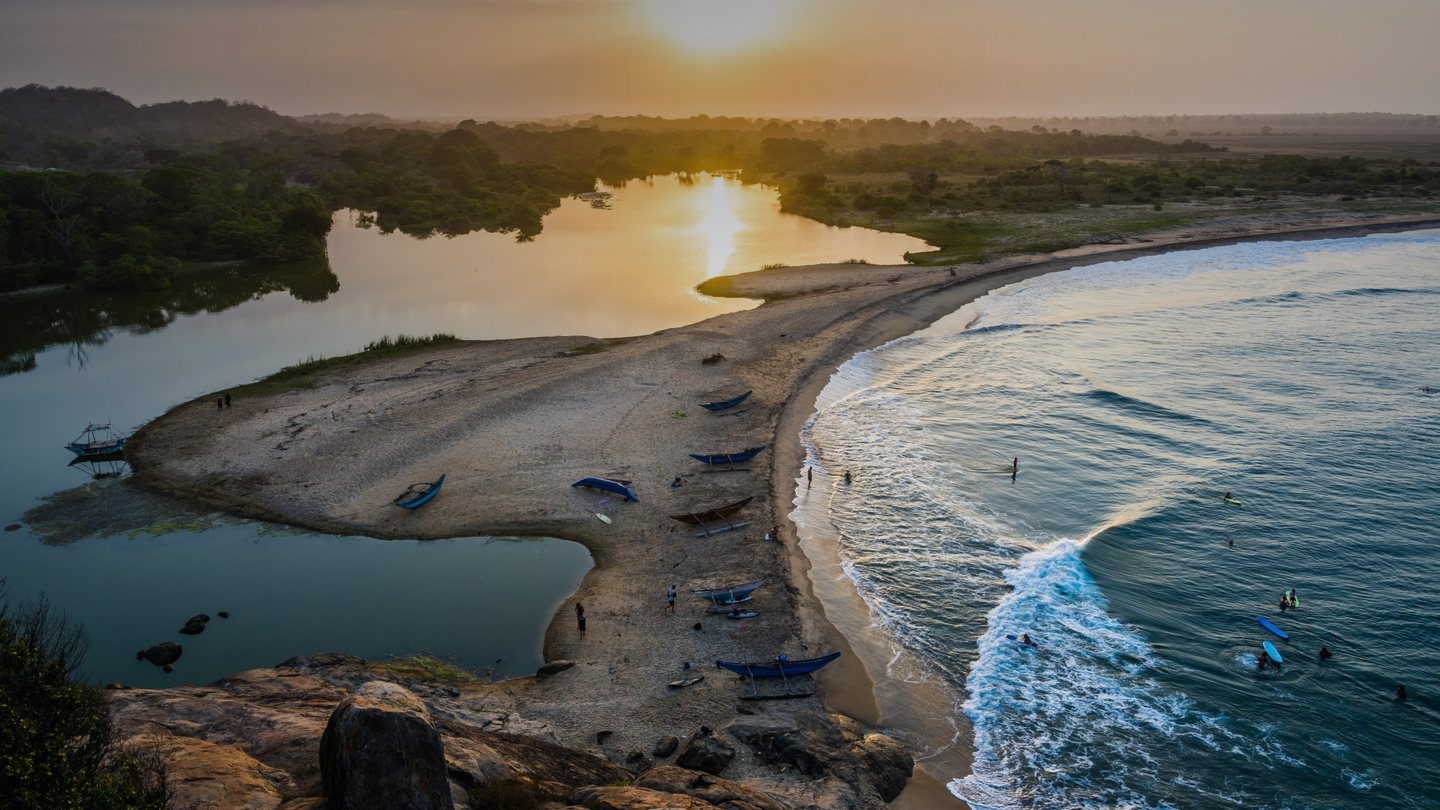
Main Point is a long right-hand point break peeling over sand-covered rock, and on a good day it runs a long way. It is intermediate to advanced — the takeoff is steep and the crowd knows what it is doing — but the wave itself is the definition of a fun point rather than a heavy one.
Around it: Baby Point and Whiskey Point for beginners and improvers, both gentler and both a tuk-tuk ride away. Peanut Farm, further down, which is two breaks in one bay and worth the trip. Elephant Rock, quieter. Pottuvil Point, a long right that often has almost nobody on it and does involve a walk.
The town itself is one road and gets busy in season. Outside May to September a lot of it closes and the swell becomes unreliable, which is worth knowing before booking a September flight.
Learning
Sri Lanka is one of the better places in the world to learn to surf, largely because Weligama exists — sand bottom, consistent small waves, warm water, no wetsuit, and instruction that costs a fraction of Australia or Europe.
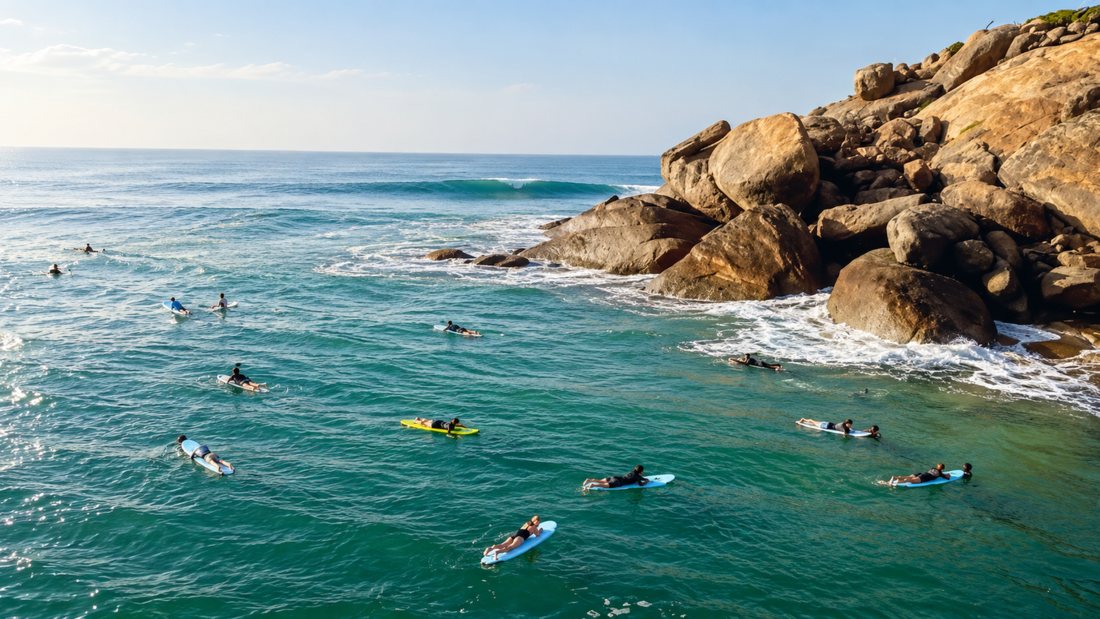
A week of lessons will get most reasonably fit people standing and riding whitewater confidently. Surf camps that bundle accommodation, board and daily coaching are common along the south coast and are decent value.
Two pieces of advice. Learn on a soft-top and stay on it longer than your ego wants. And learn on sand before you go anywhere near reef — the south coast reefs are shallow, sharp, and unforgiving of a beginner's wipeout in a way sand is not.
Boards, and a thing worth doing
Hire is cheap and widely available at both ends of the island, and most people travelling for a couple of weeks do not bother bringing a board.
One practical habit: photograph the board before and after you take it out. Damage disputes on hire boards are a known irritation, and a timestamped photo ends the conversation before it starts.
Photograph the hire board before you take it out. It takes four seconds and settles arguments.
Water, and being sensible
Warm enough year-round that you will never want a wetsuit, and a rash vest is more about sun than anything else. The sun here is stronger than the temperature suggests and reef cuts in the tropics infect quickly, so treat them properly the same day.
Rip currents are strong on both coasts and are the main danger to anyone in the water, surfer or not. Ask locally about the specific break before paddling out somewhere new. Hundreds of people drown here every year, visitors among them. This is not a formality.
How to actually plan it
Pick the coast that matches your dates, not the break you have seen photographs of. If you are coming in January, the south is excellent and Arugam Bay is out of season. If you are coming in July, go east and the south will be a wet disappointment.
Both coasts have enough to fill a fortnight. Trying to have both in one trip means half of it in the wrong place, and that is the single mistake worth avoiding.
Follow
Plan around it

Leave a comment