
Wildlife
The blue whales off Mirissa
The largest animal that has ever lived passes within an hour of a small fishing harbour, and the reason is geological.
Most whale watching involves going a long way out. Off Mirissa you do not, because the continental shelf falls away unusually close to Sri Lanka's south coast. Deep, cold, nutrient-rich water sits within a short run of the harbour, and blue whales — up to thirty metres, heavier than any dinosaur — pass through it on migration.
That accident of bathymetry is why a fishing town of a few thousand people has become one of the most reliable places on earth to see the species.
When
The season runs roughly November to April, with December through March the peak. Those are also the dry months on the south coast, so the timing lines up neatly with the rest of a southern itinerary.
Outside that window the seas get rough and the boats often do not run. If you are travelling mid-year, Trincomalee on the east coast is the alternative — blue whales and sperm whales feed offshore there between roughly May and October, and it is far quieter than Mirissa in season.
What a morning looks like
Boats leave the harbour around half past six, which means checking in at six and leaving your hotel around a quarter to. They go early because the sea is calmest then, not because the whales keep office hours.
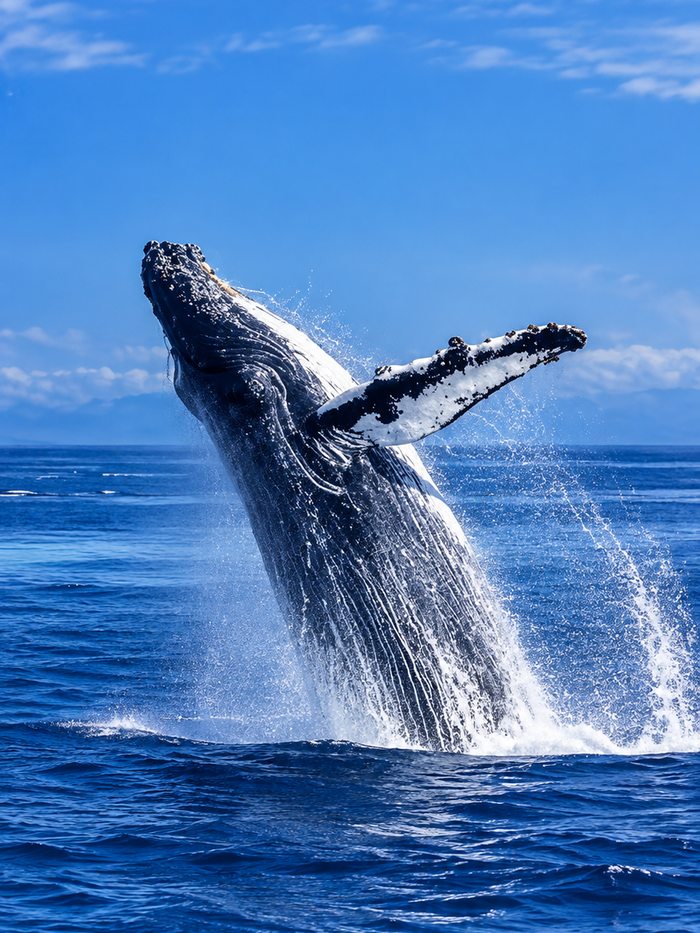
Three to five hours, depending on how long it takes to find anything. You will see flying fish almost immediately and spinner dolphins with high probability — several hundred at once is not unusual, and they will ride the bow. Blue whales are the reason people come and are considerably less certain.
An honest operator will tell you the whale sighting rate is around half. Anyone promising more is selling something.
The seasickness problem
This catches out more people than anything else. The boats are small, the swell is real, and a distressing number of passengers spend the trip below deck being unwell rather than looking at whales.
Take a tablet the night before and another an hour before departure. Eat something light — toast, a banana — and skip the coffee. Stay outside on deck rather than in the cabin, where the air is worse and there is no horizon. Look at the horizon, not at your phone or your camera screen. That last one matters more than people expect.
Choosing an operator, which is the whole thing
Sri Lanka introduced the Sea Mammals Observation Regulations in 2012 precisely because boats were crowding and chasing whales. The rules are specific and worth knowing, because they give you something concrete to ask about.
Boats must cut the engine and stay at least a hundred metres from a whale, and fifty from dolphins. No crossing in front of or behind the animals, and no blocking their path. No feeding, no touching, no swimming with them. Operators must be licensed by the Department of Wildlife Conservation.
Ask any operator how they handle approaches before you book. A good one will answer in detail and without irritation, because they are proud of it. The cheapest boats tend to be the largest, the most crowded and the most aggressive around the animals — they chase, they crowd, and they get close because passengers reward it.
Ask how they handle approaches. The answer, and how readily it comes, tells you everything.
Expect to pay somewhere between fifty and eighty dollars a head. The middle of that range is usually the right trade of comfort, boat size and behaviour. Paying the least here is a false economy in a way it rarely is elsewhere.
What you might see
Blue whales, which surface, blow a column of spray several metres high, roll forward and are gone. The fluke — the tail coming up as it dives — is the shot everyone wants and does not always come.
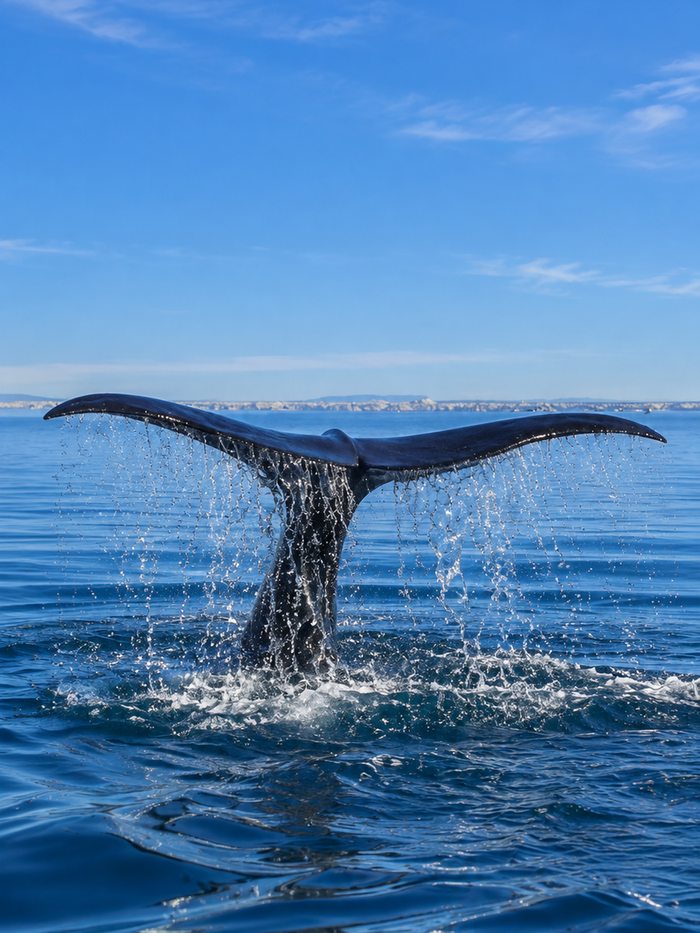
Also sperm whales, Bryde's whales, spinner and bottlenose dolphins in numbers, turtles, and occasionally something unusual — orcas, pilot whales, a whale shark. Flying fish constantly.
Managing the expectation
It is wild animal watching from a small boat, and the ordinary outcome is a lot of open water, some dolphins, and a whale seen at distance for perhaps ninety seconds. That ninety seconds is worth the morning.
Some operators offer a discounted or free second trip if nothing is sighted, which tells you something about their confidence and is worth asking about. And if the sea looks bad and the operator cancels, that is a good operator rather than a wasted morning.
Plan around it

Leave a comment