
Manifesto
The island has two monsoons. Most itineraries only know about one.
Sri Lanka is smaller than Ireland and has two monsoons. They arrive at opposite ends of the year, on opposite coasts. Almost everything written about travelling here is written as though there were one.
That sentence is the reason this company exists.
The thing nobody tells you first
The south-west monsoon runs roughly May to September and soaks the coast from Colombo down through Galle to Tangalle — which is to say, every beach a first-time visitor has heard of. The north-east monsoon runs roughly October to January and does the same to Trincomalee, Arugam Bay and Jaffna.
The island is never closed. It is only ever half open, and which half changes.
So the best beaches in Sri Lanka is not a question with an answer. It is a question with two answers and a calendar. The same is true of when to see whales, when to climb Adam's Peak, and when the hill country train is worth the early start.
Search for a Sri Lanka itinerary and you will get the same fourteen-day loop in forty different fonts: Sigiriya, Kandy, Ella, Yala, Galle, home. It is a good loop. We use most of it ourselves. But it is printed identically for a traveller arriving in January and a traveller arriving in July, and one of those two people is going to spend their holiday watching rain move sideways across a bay they were promised.
What The Pearl Edition is
An editorial platform for Sri Lanka, run between Singapore and Colombo.
We write the island the way a magazine would rather than the way a booking engine does. Long pieces, specific places, a point of view. The house in Galle Fort that a cricketer bought without going inside. What Geoffrey Bawa actually did to tropical architecture. What twelve days here really costs, in numbers, including the parts nobody itemises.
We are not a hotel chain with a blog attached. We have no rooms to fill, which means when we say a property is worth the money we are not also the person selling it.
Then we built the thing that plans the trip
Reading is one job. Going is another, and the second one is where most people get stuck — forty open tabs, a spreadsheet, a vague sense that the order is wrong.
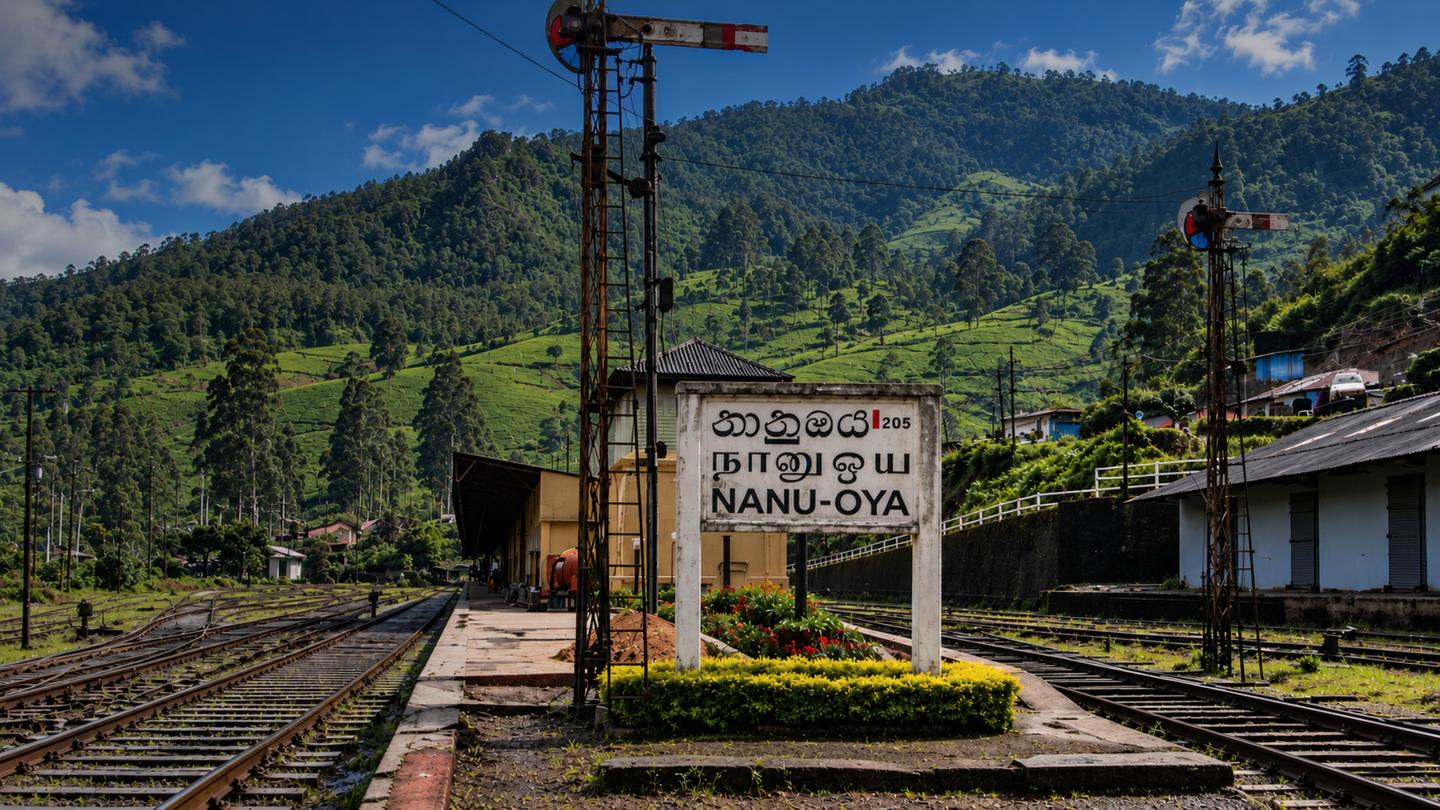
So we built a planner. Seven questions, about two minutes.
When you're going. How many of you. How long. What kind of trip. What kind of stay. How you want to move. Anything you must see.
They are the same seven questions a good planner in Colombo would ask you across a table, in roughly the same order, for the same reasons. At the end you get three complete routes — we call them Sojourn, Voyage and Odyssey — each with the towns in driving order, the drive between every pair, a hotel in each stop, and a starting price. You can swap any stop, add or drop experiences, and watch the number move.
Nothing is booked. Nothing is charged. You do not make an account.
The rules it is not allowed to break
Software that plans travel is easy to write and hard to trust, so it is worth saying what ours cannot do.
Every route starts in Colombo. You land at Katunayake at some unsociable hour off a long-haul flight. Driving three hours south that morning is the most reliable way to ruin the first day of a holiday. One night in the city, always — swap it for Negombo if you would rather sleep near the runway.
No stop is longer than two nights. Nobody needs three nights in Ella. The stop count is derived from the nights, not guessed.
Routes follow the real road network. Eighteen places, two hundred and eighty road legs, each one a real driving time rather than a straight line on a map. The order is solved against that network, in whichever direction costs less time in the car.
No driving day over seven and a half hours. This one does the most work, and it is the one that argues with you.
What happens when you ask for Jaffna
Jaffna is the Tamil cultural capital, at the very top of the island, and it is a long way from everything a first trip usually contains. Colombo to Jaffna is about eight and a half hours on the A9 — local drivers will tell you nine or ten, and they are the ones driving.
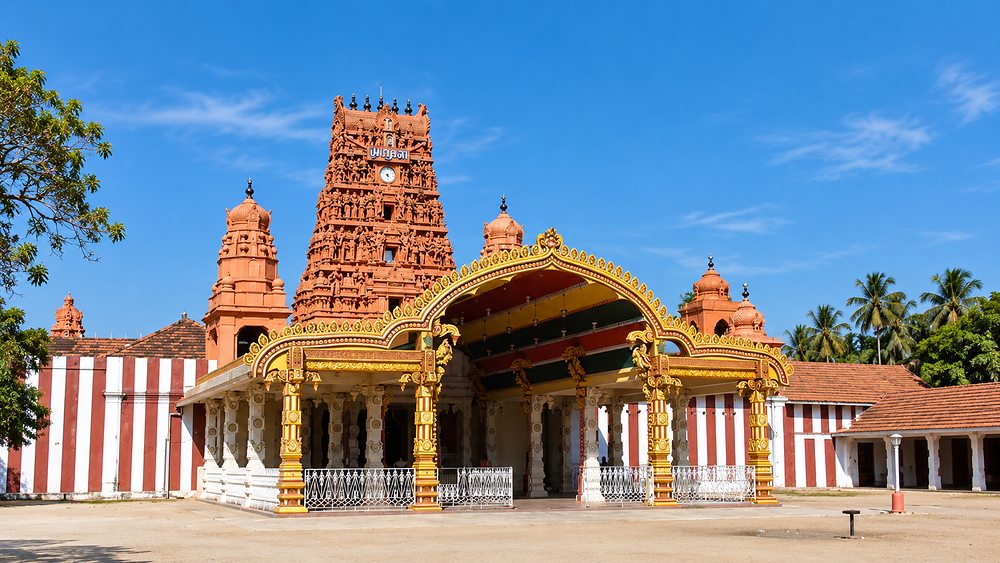
Ask most planning tools for Jaffna and they will cheerfully append it to the end of a south-coast route, which produces an eleven-hour driving day nobody will enjoy and no good agent would sell you.
Ours does something a planner does instead. Naming a place pulls the whole route towards it: the other stops competing for your nights are chosen by how near they are to the one you asked for. Ask for Jaffna and you stop being offered Weligama. You start being offered Anuradhapura, Sigiriya, Trincomalee — the northern half of the island, which is the trip you were actually describing.
And if a leg still runs long, it looks for the town that breaks it. Colombo to Jaffna in one push is eight and a half hours. Through Anuradhapura it is four and four — and Anuradhapura is a sacred UNESCO city, not a service station. That is precisely what an experienced driver would suggest, and it is now the shortest route the planner offers.
There is one more thing it will do, which we think matters more than any of the above. If you ask for two places that genuinely cannot be reached well in the nights you have — Yala in the deep south and Jaffna in the far north, in five nights, eleven and a half hours apart — it will tell you so and leave one out. It would be easier to say yes. It would also be a worse holiday.
What it is not
It is not a chatbot writing you a confident paragraph about a hotel that does not exist. Every property in it is real, in our own inventory, and one we would send a friend to. The prices are indicative market rates, labelled as a starting price, itemised so you can see what is in them.
And the last step is a person. Our licensed travel partner in Sri Lanka comes back within forty-eight hours, usually sooner, with real availability, a quote, and usually a few places we keep off the website. The software is there to save you the forty tabs, not to replace the person who knows which villa has scaffolding up this month.
Who is behind it
The Pearl Edition is run by its two co-founders, Sithum Walter and Rynthia Mathew. Between them, about fifteen years of creative work across Asia-Pacific, and a working life split between Singapore and Colombo.
That second half matters more than it sounds. Plenty of people write about Sri Lanka. Rather fewer are on the island often enough to know that a road has reopened, that a hotel has changed hands, or that the hill country train is running only half its route this month. Everything here is checked by someone who was recently standing in it.
What we are actually trying to do
In 2018, Lonely Planet named Sri Lanka the number one country to visit in 2019 — ahead of Germany in second and Zimbabwe in third, ahead of everywhere. Six months later came the Easter attacks. Then the pandemic. Then the economic collapse. It is difficult to think of a country that has been handed a crown and then had it taken apart quite so comprehensively.
Which makes the numbers worth reading properly. The island closed 2025 on roughly 2.36 million visitors, finally past its 2018 peak of 2.33 million, and took 1,535,122 arrivals in the first eight months of 2026. Seven years on, the recovery is done. What follows it is the harder question.
Because the interesting question was never how many people come. It is what they do when they are here, how long they stay, and whether the island is priced and presented as somewhere worth travelling a long way for.
Sri Lanka has been sold cheap for a long time. Eight UNESCO World Heritage sites, leopards at a density found nowhere else on earth, a train line that people fly across the world to sit on, Bawa villas that changed how the tropics build — and a reputation, in a lot of markets, as the inexpensive stop on the way to somewhere else.
We would like to help change that. Not by making the island expensive, but by making the case properly: writing about it seriously, pricing it honestly, and putting a plan in front of people that is good enough to act on.
Every great destination has one place people check first. Sri Lanka does not have one yet. We would like to be it.
If that works, the visit that matters is not the first one. It is the second.
Arrival figures are from the Sri Lanka Tourism Development Authority; the 2019 ranking from Lonely Planet’s Best in Travel. Road times are our own, driven.

Leave a comment