
Practical
What a Sri Lanka trip actually costs
Almost every budget guide to this country is out of date, and all of them are wrong in the same direction.
Sri Lanka was extraordinarily cheap in 2019. Then the pandemic closed it, the 2022 economic crisis devalued the rupee sharply, and fuel, imported goods and anything priced in dollars — hotel rates, site entry fees — moved a long way. Guides written before 2023 substantially underestimate what a trip costs now, and a great many of them are still the first results you find.
It is still excellent value. It is meaningfully cheaper than Thailand for comparable quality and not remotely comparable to Europe. But arriving with 2019 numbers in your head will cause a nasty week.
The Pearl price index, October 2026
| What | Typical cost |
|---|---|
| Daily budget, backpacking | About $25 to $40 per person |
| Daily budget, comfortable | About $55 to $90 per person |
| Daily budget, driver and better hotels | $150 and up per person |
| Rice and curry, local place | About $1 to $2 |
| Major heritage site, foreigner ticket | Around $30 |
| Private driver, per day | About $50 to $100 |
| Local SIM with a month of data | About $5 to $8 |
| Card surcharge, some businesses | Around 3 per cent (officially banned) |
| Two weeks for two, comfortable, with a driver | About $2,500 to $3,000 |
Figures are checked by our editors and dated. They are guides, not quotes. Facts and sources →
Daily budgets, honestly
Per person, per day, excluding international flights, and treating these as ranges rather than promises.
Backpacking, roughly $25–40. Guesthouse rooms or dorms, eating local, trains and buses, one paid site every day or two. This is a real budget that a lot of people travel on, and eating rice and curry at local places is what makes it work.
Comfortable, roughly $55–90. A private room in a decent guesthouse with air conditioning and breakfast, a mix of local and tourist restaurants, tuk-tuks and the occasional car, and the major sites without thinking about it. This is where most first-time visitors land.
With a driver and better hotels, $150 and up. Once you add a private driver for the whole trip and boutique or heritage properties, you are into a different arithmetic. It buys a great deal here compared with anywhere else at the same price.
Food is close to free. Entry tickets are not. That inversion catches people out.
Where the money actually goes
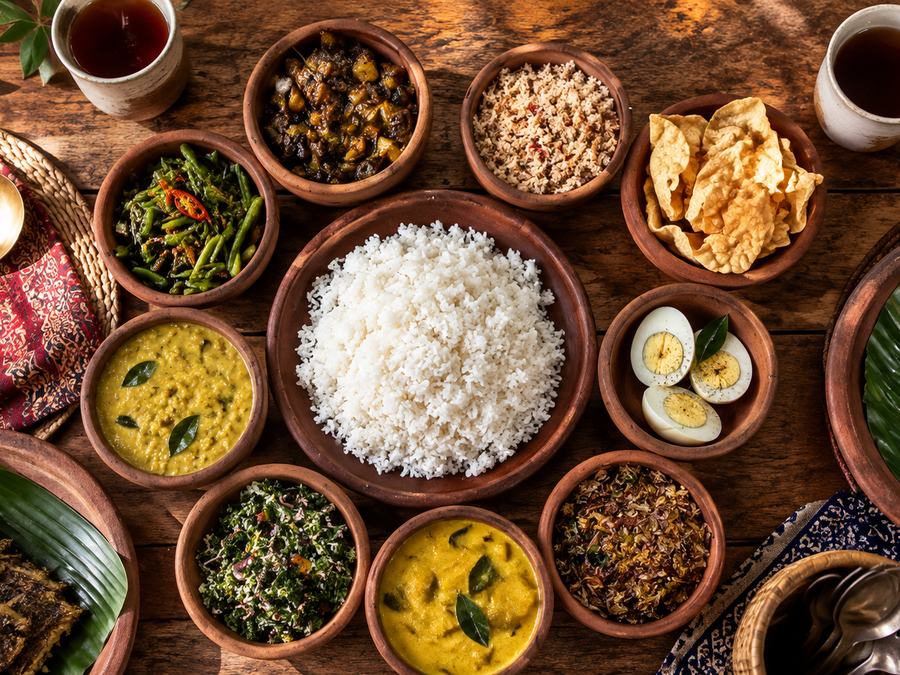
Not on food. A plate of rice and curry with three or four accompaniments at a local place costs a few hundred rupees — call it a dollar or two. You could eat extremely well here for five dollars a day and never feel deprived.
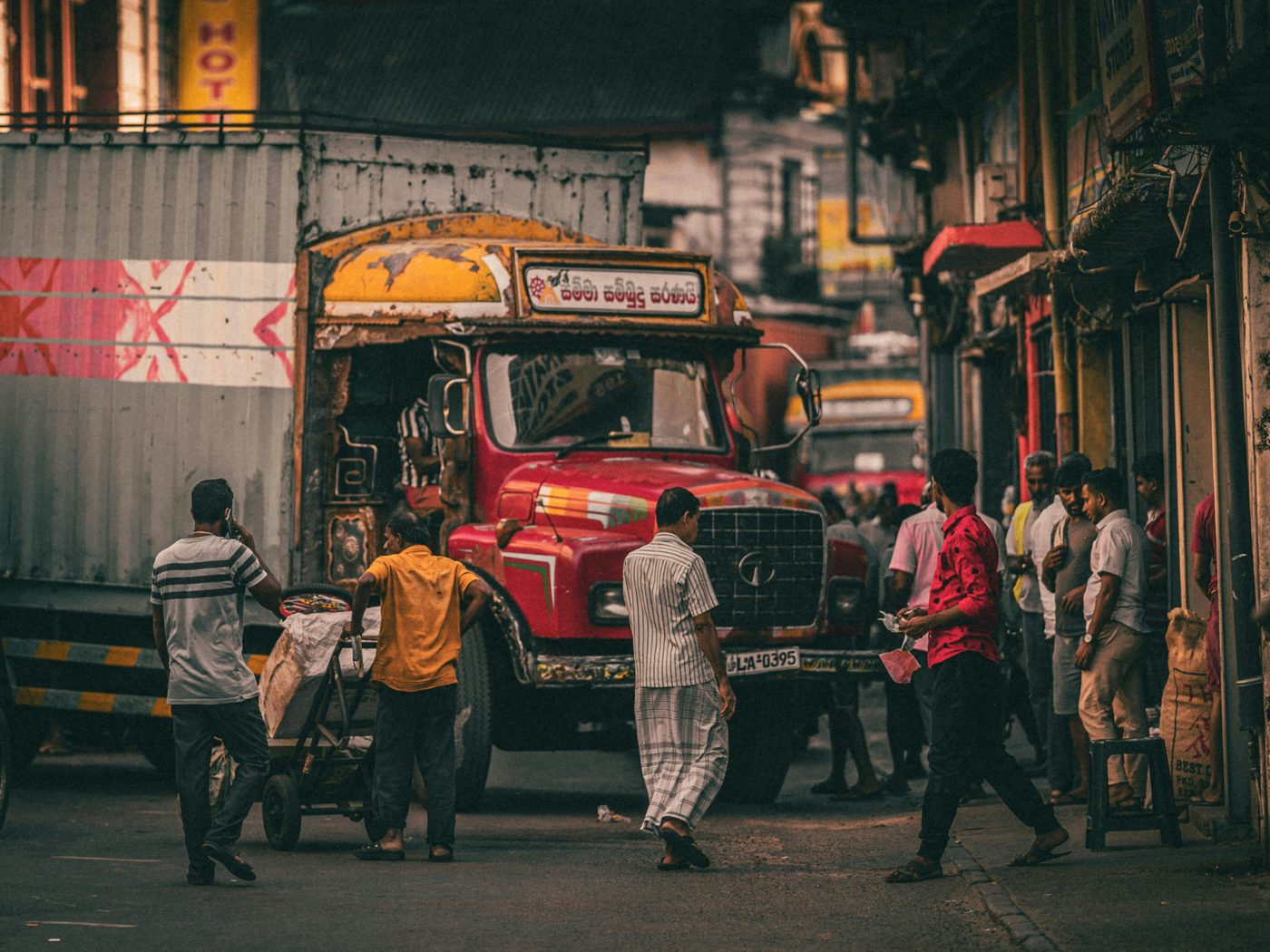
It goes on entry fees. Sri Lanka runs official dual pricing at heritage sites, and the foreigner rate at the big three ancient sites is thirty to thirty-five dollars a head. Sigiriya is US$35, and Polonnaruwa and Anuradhapura are US$30 each. The Dambulla caves and the Temple of the Tooth cost far less, at around LKR 2,000–3,000. Do all five in a week and it adds up to more than a hundred dollars a head.
This is government policy rather than a scam, and the reasoning is sound: charge locals the same and the sites become inaccessible to the people whose heritage they are. Worth knowing, and worth budgeting for, because it is the line item that surprises people most.
And it goes on transport, if you take a driver. Reckon on somewhere between fifty and a hundred dollars a day depending on vehicle and season, usually including the driver's own accommodation and meals. Split between two or four people it is far better value than it sounds.
The card surcharge nobody warns you about
Some Sri Lankan businesses still add a surcharge, often around three per cent, to bills paid by card. The Central Bank says they are not allowed to. It is sometimes on the menu and sometimes not, and it is the single most avoidable cost on a trip here.
Carry rupees. The country runs largely on cash outside Colombo and the main beach towns. And if a card machine offers to charge you in your home currency, decline and pay in rupees — that conversion carries a markup of its own.
Carry cash. It is the cheapest decision you will make all trip.
Where the value is
Trains, absurdly. A second-class seat on the hill country line costs a few hundred rupees and gives you the same window as the first-class observation car at a fraction of the price. For any journey a train covers, it beats a car on cost by an order of magnitude.
Beaches are free. Every one of them. Walking Galle Fort is free. So is most of what makes the island memorable.
A local SIM at the airport runs five to eight dollars for enough data to last a month, which is a fraction of roaming.
A worked fortnight
Two people, fourteen days, comfortable rather than luxurious, sharing a room and a driver. Beds at fifty a night, food at twenty-five a day between them, driver at sixty, entry fees averaging twenty a head across the trip, plus a safari and incidentals.
That lands somewhere around two thousand five hundred to three thousand dollars for two people, on the ground, for a fortnight. Strip out the driver and use trains and tuk-tuks and it drops by six or seven hundred. Add boutique hotels and it climbs quickly.
Those are indicative, not quoted. Prices move, the rupee moves, and high season on the south coast is not the same market as May in Trincomalee.
Tipping
Not obligatory, generally appreciated, and modest. Ten per cent at a restaurant if service is not already on the bill — check, because it often is. Five to ten dollars a day for a driver on a multi-day trip. A little for a guide who was actually good. Round up a tuk-tuk fare.
Two ways to spend less without noticing
Eat lunch where the crowd is. The best rice and curry in the country costs almost nothing and is served at one o'clock in places with no menu.
And be selective about the ancient cities. Sigiriya and Polonnaruwa in one trip is plenty; adding Anuradhapura because it is on the list means another thirty dollars each for a site you will visit tired. Two done properly beats three done dutifully, and it is cheaper.
Plan around it

Leave a comment