
Architecture
The barrister who taught Asia how to build
He was a barrister until he was nearly forty. Then he bought a derelict rubber estate, and spent the rest of his life working out what a building in the tropics is actually for.
Geoffrey Bawa did not begin as an architect. He read English at Cambridge, studied law at the Middle Temple, and was called to the bar in 1944. He came home to Ceylon, found the law dull, and spent a long stretch travelling with the vague intention of buying a villa on an Italian lake and never coming back.
He came back. In 1948 he bought Lunuganga, a failing rubber plantation on a hill above a lagoon near Bentota, and started rearranging it — moving earth, cutting sightlines, planting and replanting. He was not trained for any of it. The garden is what sent him to architecture school, and he qualified at thirty-eight, an age at which most architects are already halfway through their careers.
Number 11
In 1958 he bought a small house at the end of a cul-de-sac off Bagatalle Road in Colombo. Over the following decade he took over the other three in the row and knocked them into one, which is why the house has the plan it does — a sequence of courtyards and corridors that makes no sense as a single design and perfect sense as four houses persuaded to become one.
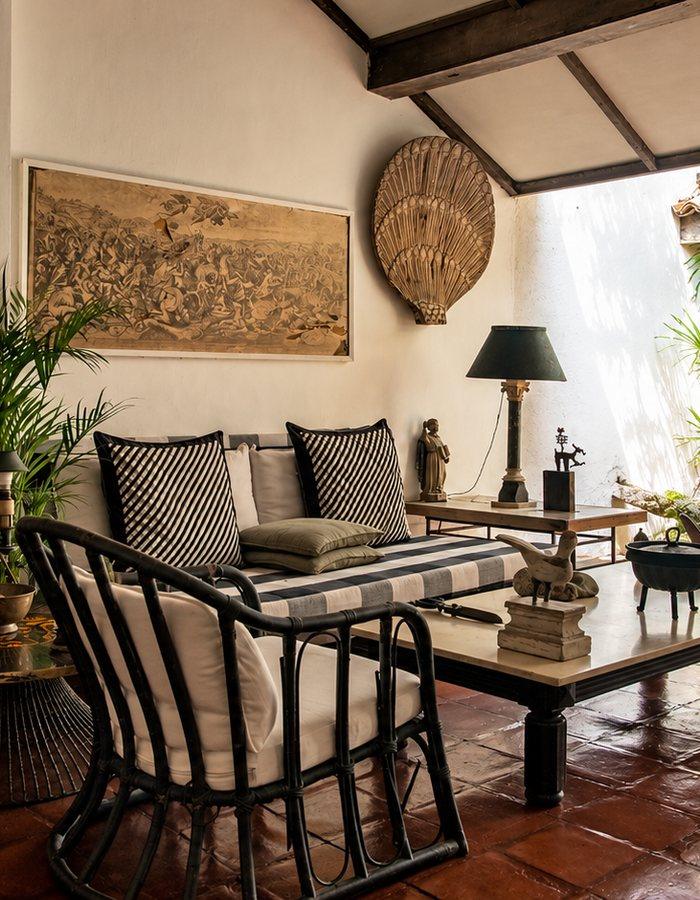
It was his home and his office for over forty years, and it is kept as he left it. The vintage cars are still in the carport. What you notice, moving through it, is that you are never quite indoors and never quite outside. Light arrives from above rather than through windows. A corridor turns and there is a courtyard, and then a tree, and then another room. Nothing announces itself.
You are never quite indoors and never quite outside. That is the whole idea, worked out in one house.
It is open by appointment, and a two-room suite upstairs can be booked for the night. Staying there is the closest thing available to understanding the argument he was making, because the house does its best work at six in the morning and again at dusk, which is not when tours run.
Lunuganga
The garden took fifty years and was never finished. Bawa worked on it until the strokes stopped him, and the twenty-five acres are less a garden than a sequence of decisions — a hill lowered here to open a view, a terrace cut there to catch the afternoon, a pot placed where the eye needs somewhere to rest.
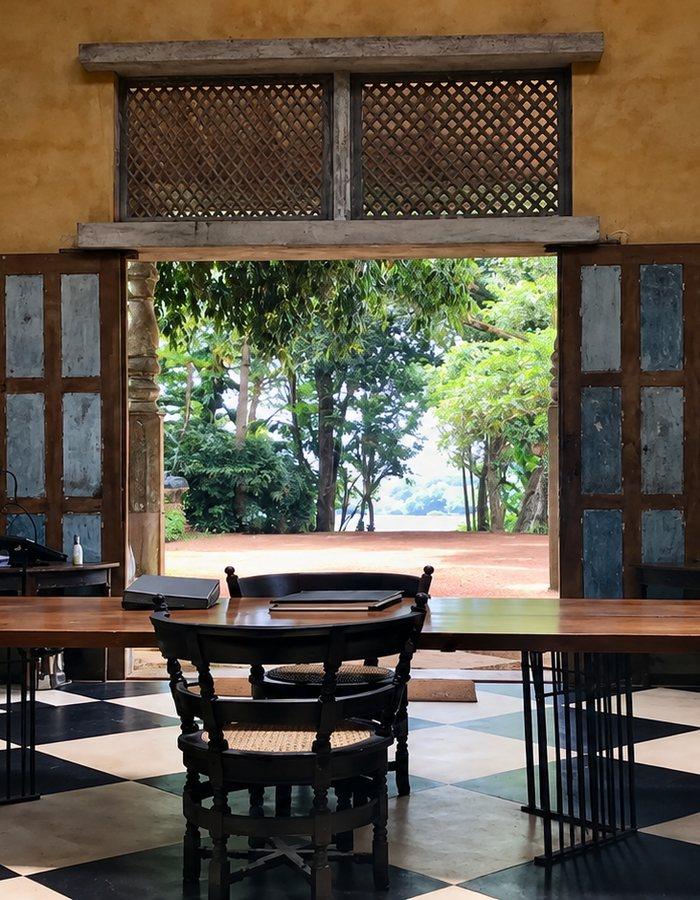
The word people reach for is Italian, and Bawa would not have objected; he loved the Mediterranean and never quite resolved the fact. But the plants are tropical and the light is equatorial, and what he built is a landscape that borrows a European grammar to say something entirely local.
It is run as a small hotel now, for the Lunuganga Trust. You can walk it in an afternoon on a guided visit, which is enough to see it and not enough to understand it. If the budget allows, stay.
What tropical modernism actually means
The phrase gets used loosely, usually to mean a nice house with a lot of teak. What Bawa was doing was more specific and more useful.
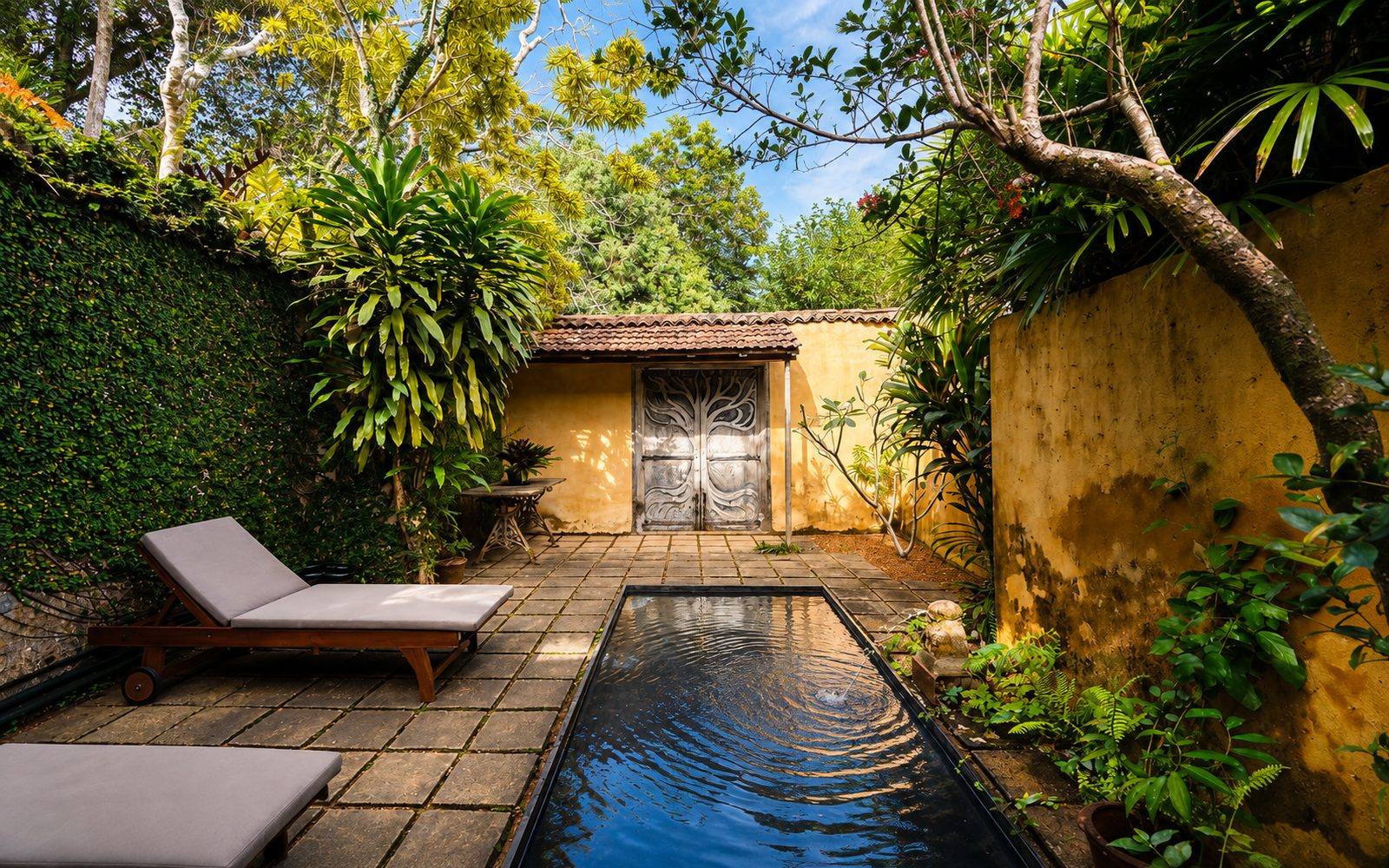
Modernism arrived in Asia as an import: flat roofs, glass walls, sealed boxes designed for northern European light and then air-conditioned into submission in Colombo. Bawa started out copying Le Corbusier and quickly noticed the buildings did not work. So he took the modernist plan — open, uncluttered, free of ornament for its own sake — and rebuilt it around heat, monsoon and glare.
That means courtyards that pull air through a building without a fan. Deep overhangs so a window can stay open in the rain. Verandas doing the work of corridors. Materials from within a day's drive. Roofs that frame a view rather than seal you off from it. It is not a style so much as a set of answers to a climate, which is why it has aged so well while the glass boxes of the same era have not.
It is not a style. It is a set of answers to a climate.
He also did it collaboratively, which architects of his stature rarely do. The batik artist Ena de Silva, the sculptor Laki Senanayake and a rotating cast of craftsmen were in the work rather than decorating it afterwards. The ceiling at the Bentota Beach Resort is de Silva's. The lift doors are Senanayake's. A Bawa building is usually several people's building.
The woman who got there first
It is worth saying plainly, because most accounts skip it: Minnette de Silva was building climate-responsive modernist houses in Sri Lanka before Bawa qualified. She was the first Sri Lankan woman to become a professional architect and the first Asian woman elected an associate of RIBA, and the ideas usually credited to him were in her work first.
She was recognised abroad and largely overlooked at home, which says more about the period than about the buildings. Any honest account of tropical modernism on this island starts with her.
Where to see it
Number 11 in Colombo and Lunuganga near Bentota are the two to book, and both need arranging ahead. Beyond those, the work is scattered across the country and much of it is still in use, which is the best way to see architecture — occupied rather than preserved.
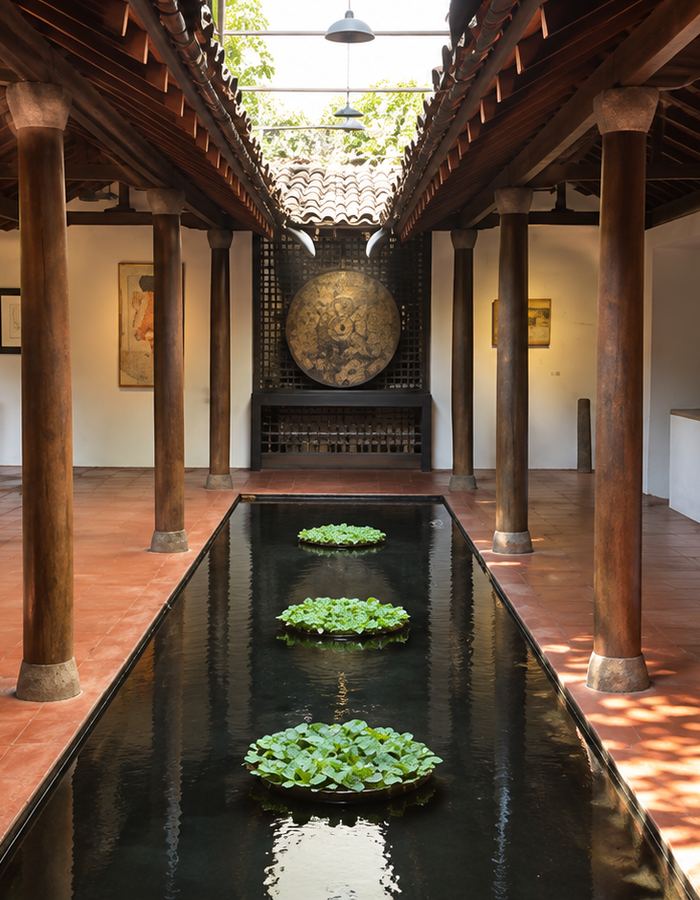
The Bentota Beach Resort was one of his major hotel commissions and is worth a lunch for the ceiling alone. Several hotels on the south and west coasts are his, or are close enough in spirit that the difference stops mattering. Kandalama, cut into a rock face above a tank and left to be swallowed by jungle, is the one that most divides opinion and the one most worth arguing about.
Why it matters now
Bawa died in 2003, having received the Deshamanya in 1993 and the Aga Khan Special Chairman's Award in 2001. The Trust keeps the houses and the archive.
But the reason to care is not heritage. Every hot country is now building the sealed glass towers he rejected sixty years ago, and then spending enormous amounts of energy cooling them. Bawa's buildings are comfortable without doing that. In a warming world that is not a nostalgic argument, it is a structural one, and it is why exhibitions of his work keep travelling to London and Singapore and Melbourne rather than staying politely at home.
He said very little about any of it. There is almost no theory, few manifestos, barely an interview worth quoting. He preferred to build the thing and let you walk through it, which is still the only way to understand what he meant.
Plan around it

Leave a comment