
Hidden Sri Lanka
The quiet Sri Lanka
Somewhere off Kalpitiya this winter, a pod of dolphins will come up beside a small fishing boat at seven in the morning, and there will be no other boat in sight. That is the whole idea of this story.
Most first trips to Sri Lanka follow the same line: Sigiriya, Kandy, the train to Ella, a safari in Yala, a few nights in Galle. It is a classic for good reason, and in season it is busy. But the island is bigger than its famous circuit, and in 2026 the travel press has started to notice the quiet places: the lagoons of the north-west, the great lake in the east, the misted ridges above Kandy and the Tamil north.
Here are four places off the beaten path in Sri Lanka, what each is really like, and the month to go.
The short answer
Go to Kalpitiya for dolphins and wind, Gal Oya for a safari by boat with no jeep queue, the Knuckles for walking in cloud forest, and Jaffna for a culture that feels like another country. All four are genuinely off the beaten path, none is on the classic circuit, and each deserves two or three nights rather than a stop.
Four quiet places, at a glance
| Place | Best months | Best for |
|---|---|---|
| Kalpitiya | Nov–Apr for dolphins; May–Oct for wind | Dolphins, kitesurfing, lagoons |
| Gal Oya | The dry months, roughly Mar–Sep | Boat safari, swimming elephants |
| The Knuckles | Jan–Mar | Walking, cloud forest, villages |
| Jaffna | Jan–Sep | Tamil culture, temples, islands |
Kalpitiya: the lagoon coast
Kalpitiya is a long, thin peninsula on the north-west coast, about 165 kilometres north of Colombo, held between the open sea on one side and Puttalam Lagoon on the other. It is low, sandy and windswept, with fishing villages, mangrove-edged water and a scatter of small, empty islands in Dutch Bay and Portugal Bay. There is very little to do here, and that is rather the point.
The dolphins. From November to April the boats leave from Alankuda beach early in the morning, when the sea is flattest, to look for dolphins offshore. December to April is the best of it, and with luck there are whales too. It is not Mirissa: there are fewer boats, and the mornings feel like your own.
The wind. The other reason people come is the kite. The wind blows hard and steady from May to October, and again for a shorter spell around December to February. The lagoon behind the beach is shallow and flat, close to ideal for learning, and on most days there is more water than people. Kitesurfing in Kalpitiya →
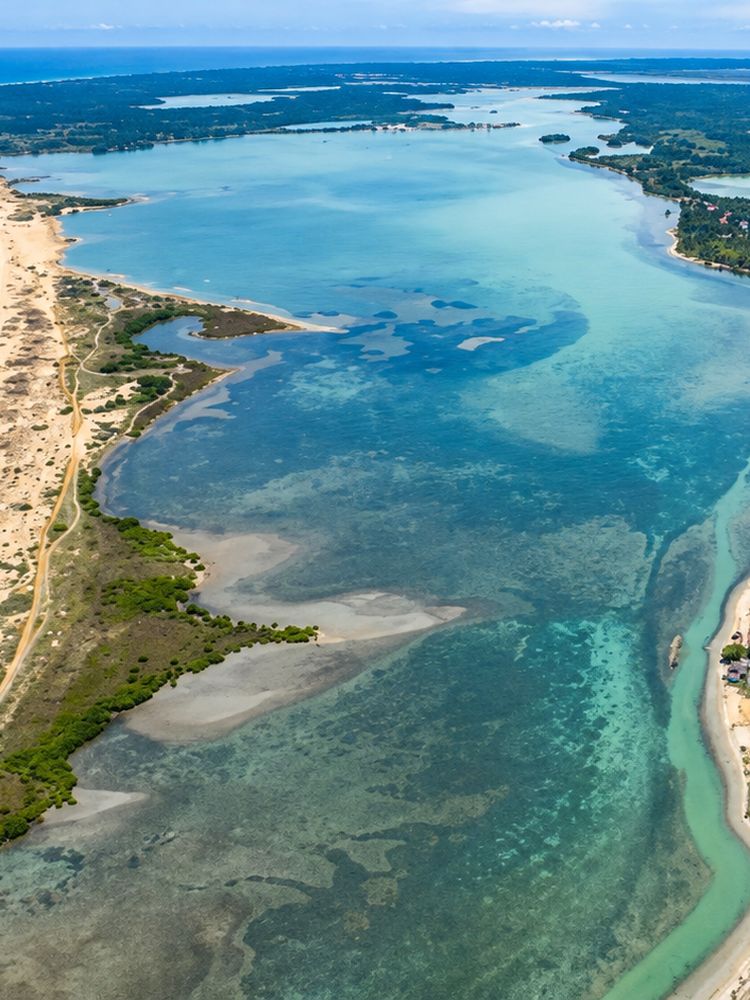
On the peninsula. A Dutch fort built of coral and limestone, still used by the navy (bring your passport), and St Anne’s Church at Thalawila, a seventeenth-century shrine that draws huge crowds of pilgrims on its feast days. Stays are mostly beach eco-lodges and kite camps around Alankuda. Bring a book.
There is very little to do here, and that is rather the point.
Gal Oya: the lake with elephants
Gal Oya is the only national park in Sri Lanka where the safari is by boat. It was created in 1954 to protect Senanayake Samudraya, the island’s largest reservoir, made when the Gal Oya river was dammed in 1950. The water drowned the old hills and turned their tops into islands, and the elephants that used to walk between them now swim.
That single difference changes everything. There is no queue of jeeps, no radio calls between drivers, no dust. There is a boat, a great many water birds, and, if the morning goes well, an elephant crossing open water with only its trunk above the surface. Elephants are here all year; the drier months, roughly March to September, are when the lake drops and the herds gather at its edge.
The forest around the park is also the home of the Vedda, Sri Lanka’s indigenous people, and some lodges arrange forest walks with members of the community: which plants are food, which are medicine, how to read a track. Phone signal is patchy at best. Most people decide that is a feature. The Gal Oya boat safari →
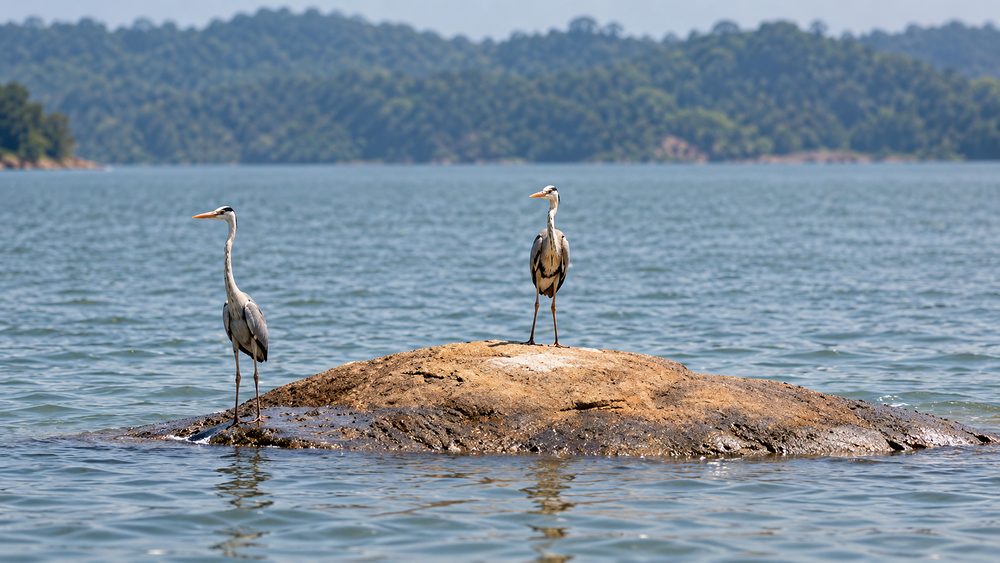
There is no queue of jeeps, no radio calls, no dust. There is a boat, and an elephant crossing open water.
The Knuckles: the misty range
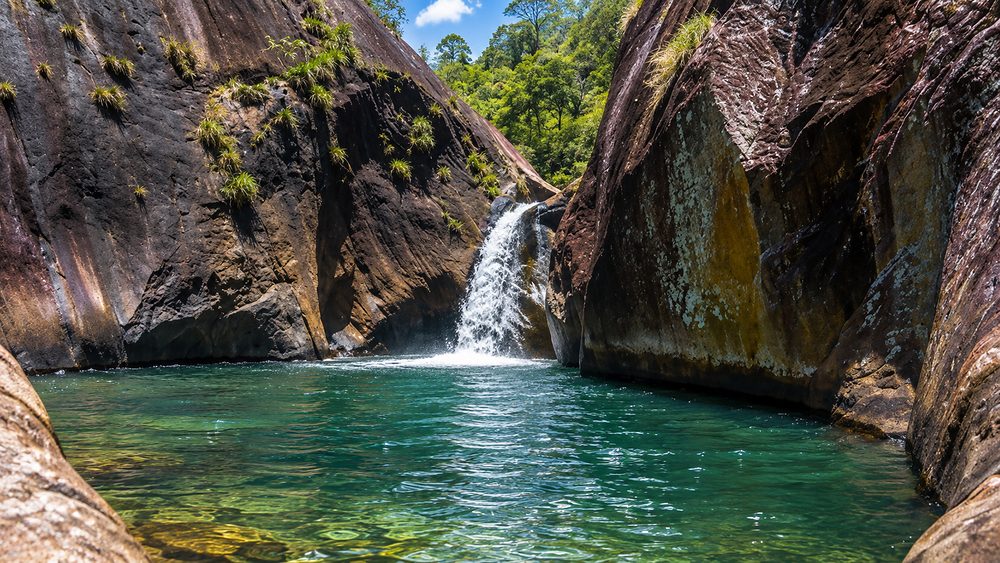
The Knuckles got their English name from a colonial surveyor who thought the peaks looked like a clenched fist. The Sinhala name, Dumbara Kanduvetiya, means the mist-laden mountains, which is the better description. This is cloud forest, a UNESCO World Heritage site about two hours from Kandy, and most itineraries drive straight past it.
A day’s walk here can pass through several climate zones, from dry forest to wet, misted montane woods full of endemic birds and orchids. Villages still farm cardamom and vegetables on terraced slopes. Meemure, on the far side, had no road until the 1990s and still feels like it. Riverston and Mini World’s End are the easier options, with the drop and the cloud without a night on the trail.
Two rules. Walk with a local guide: the trails are unmarked, permits are checked, and the weather turns in minutes. And pack for leeches, even in the dry season. January to March is the driest window. The Knuckles, the guide →
Where to stay. Santani, a destination spa on regenerating tea land on the western edge of the range, is the most comfortable base for walking. Madulkelle Tea and Eco Lodge has canvas lodges on a working estate with the peaks in front of the pool.
Jaffna and the islands
Jaffna sits at the very top of the island, on a flat limestone peninsula of lagoons and palmyra palms. It is Tamil-speaking and largely Hindu, and it feels closer to Tamil Nadu than to Kandy: the food is different, the temples are different, even the light is different, harder and whiter, thrown back off the salt flats. For most of three decades it was closed to visitors. Now it is one of the most rewarding journeys on the island.
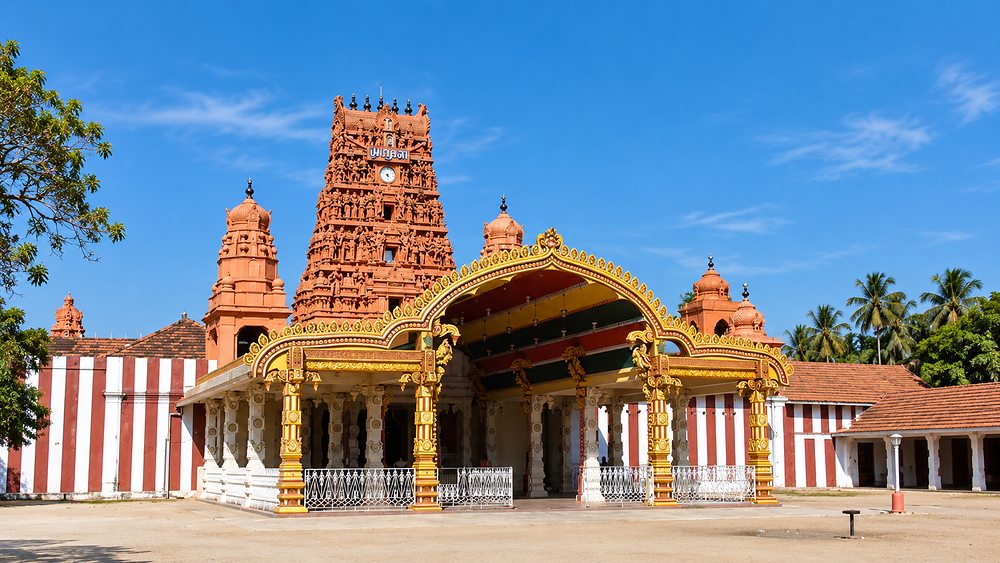
The city. Nallur Kandaswamy Kovil is the north’s great temple, gold-towered and endlessly busy; men enter bare-chested, and everyone leaves their shoes at the gate. There is a vast Dutch star fort on the lagoon, and the public library, burned in 1981 and rebuilt, which may be the most quietly moving building in the country. Then there is the food: crab curry, odiyal kool, palmyra jaggery. The northern table →
The islands. Causeways and ferries run out to a string of low coral islands. Nainativu has a pilgrimage temple at the water’s edge. Delft, further out, has wild ponies, coral-stone walls and a lone baobab tree. Go early, and take water.
Getting there. About six hours by train from Colombo Fort, or overnight on the sleeper, which is half the fun. The night train to Jaffna → Give it three nights: one for the city, one for the islands, one for the edges of the peninsula. Jetwing Jaffna is the reliable city hotel; Jetwing Mahesa Bhawan, a 1935 bungalow near Nallur, is the most characterful bed in the north. Jaffna, the guide →
Jaffna feels closer to Tamil Nadu than to Kandy. Even the light is different.
A quiet place for every month
The useful thing about these four is that between them they cover the year. Sri Lanka has two monsoons, so when one coast is wet, another is usually dry.
Where to be quiet, month by month
| Months | Go to | Why |
|---|---|---|
| Jan–Mar | The Knuckles, Jaffna, Kalpitiya | Dry walking weather; dolphins off the north-west |
| Apr | Kalpitiya, Jaffna | The last of the dolphin season; the north is dry |
| May–Sep | Gal Oya, Kalpitiya, Jaffna | Herds at the lake; the kite season; the north still dry |
| Oct–Dec | Kalpitiya | Dolphins from November. The north and east are wet now |
How to fit them in
Each of these hidden corners of Sri Lanka is a detour, not a stop, so build the route around one or two of them rather than all four. Kalpitiya is the easiest: it sits on the airport side of Colombo, so it works as a first or last few nights. The Knuckles pair naturally with Kandy and Sigiriya. Gal Oya fits a mid-year trip to Arugam Bay and the east coast. Jaffna goes well with Anuradhapura or Trincomalee, with the train one way.
And if you only have time for one: in the European winter, Kalpitiya; in summer, Gal Oya.
Questions
What are the best places off the beaten path in Sri Lanka?
Kalpitiya on the north-west coast, Gal Oya National Park in the east, the Knuckles range near Kandy, and Jaffna and its islands in the north. All four are well off the classic Sigiriya–Kandy–Ella–Galle circuit and far quieter in season.
When is the dolphin season in Kalpitiya?
Boats go out from November to April, with December to April the best months. Trips leave early in the morning, when the sea is calmest.
Can you really see elephants swimming at Gal Oya?
Yes. Gal Oya is the only national park in Sri Lanka explored by boat, and elephants cross the water between the islands of Senanayake Samudraya. Sightings are never guaranteed; the drier months, roughly March to September, are the best time.
Do I need a guide in the Knuckles?
Yes. The Knuckles is a UNESCO World Heritage site and conservation area, the trails are unmarked and the weather changes fast, so guides are required on most routes. January to March is the driest time to walk.
Is Jaffna worth visiting?
Yes, for culture rather than beaches. Jaffna is Tamil and largely Hindu, with great temples, a Dutch fort, its own cuisine and islands such as Nainativu and Delft. It is about six hours from Colombo by train, and three nights is the right length. Go between January and September.
How many days do I need for these places?
Two to three nights each. Rather than trying to see all four, add one or two to a classic route: Kalpitiya at the start or end, the Knuckles with Kandy, Gal Oya with the east coast, or Jaffna with Anuradhapura.
Plan around it
Photography and film: The Pearl Edition. Moving images are AI-assisted.

Leave a comment