
Heritage
Galle Fort on foot
The thing to understand about Galle Fort is that people live in it. It is not a monument with a town attached.
The Portuguese built the first fortification here in the sixteenth century. The Dutch took it in 1640 and rebuilt it properly over the following decades, in stone, on a promontory, with fourteen bastions and walls thick enough that they held when the 2004 tsunami came through and flattened much of the coast on either side.
The British inherited it, added the lighthouse, and largely left it alone. It became a UNESCO World Heritage Site in 1988. What makes it unusual among fortified colonial towns in Asia is that it never emptied out. There are still several hundred households inside the walls, a mosque, a Buddhist temple, churches, schools and a working post office, alongside the galleries and the boutique hotels.
It is not a preserved town. It is an old town that people did not leave.
Walk the ramparts, and walk them at the right hour
The wall circuit is a little under three kilometres and takes about an hour at a wander. Do it at five in the afternoon, not at midday. The stone holds heat, there is no shade, and the light between five and sunset is the reason photographers keep coming back.
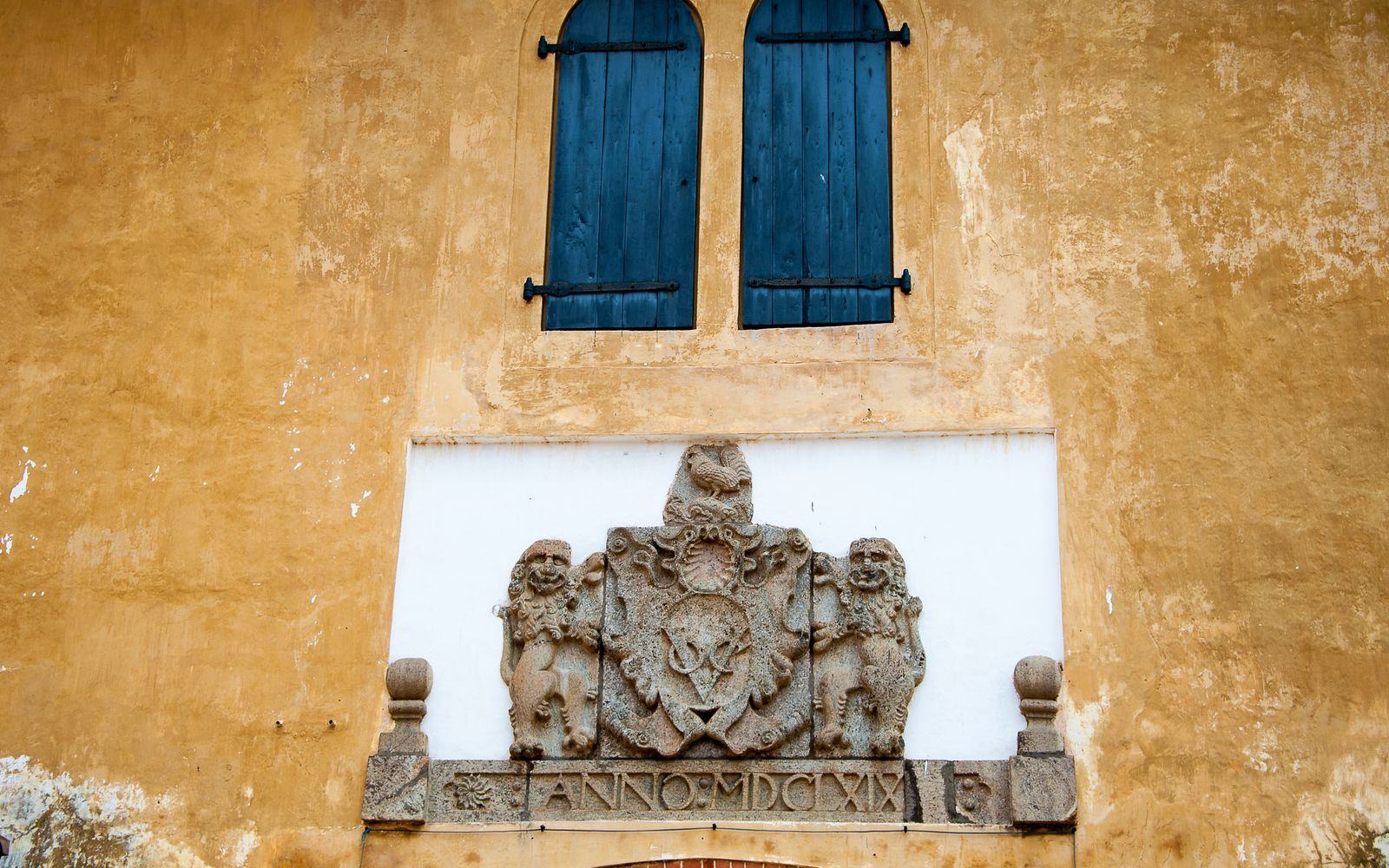
Start at the Old Gate on the harbour side, where the Dutch East India Company arms are still cut into the stone above the arch with the VOC monogram and the date. Work clockwise round to Flag Rock, which is the far corner and where everyone gathers for sunset. Local boys jump from the rocks below for tips; the drop is real and so is the timing they need to get it right.
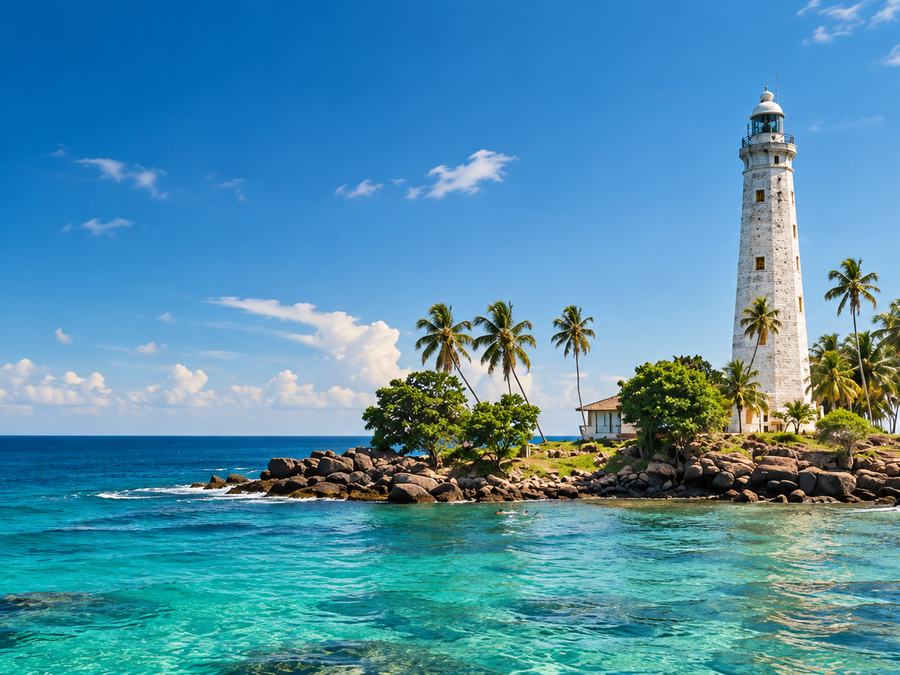
The lighthouse, at Point Utrecht Bastion, is the postcard. It went up in 1939, replacing an earlier one, and the coconut palms leaning in front of it do most of the work in every photograph ever taken of this town.
Inside the walls
The grid is small enough that you cannot get lost and dense enough that you will keep finding things. The Dutch Reformed Church dates from the 1750s and has a floor made of gravestones moved from an older cemetery, which is as blunt about mortality as any building on the island.
The Maritime Museum sits in a Dutch warehouse. The Meeran Jumma Mosque, at the lighthouse end, looks so much like a colonial church that visitors regularly walk in looking for pews. All Saints' Anglican church is Victorian Gothic dropped into the tropics with no concession to the climate at all.
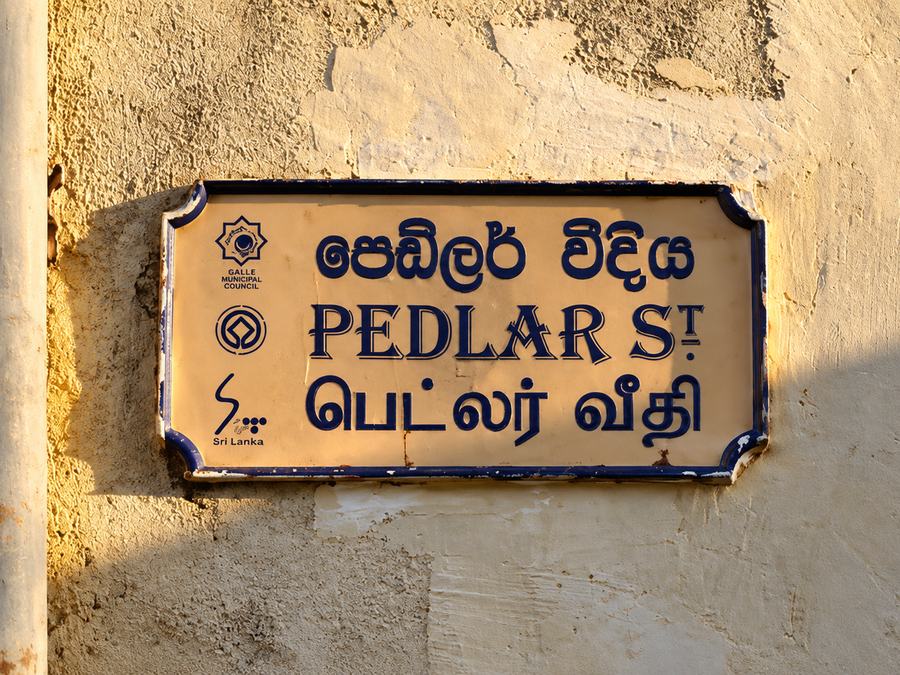
But the fort rewards aimlessness more than a list. Streets of low Dutch houses with deep verandas, doors open, someone's radio on. Rope makers, gem dealers, a man who has been making sandals in the same doorway for decades. Wander and stop. Some of those doors hide serious restoration work — Kumar Sangakkara's 120-year-old villa is one of them, though you would not know it from the street.
Cricket
The Galle International Stadium sits just outside the walls, and this is the only Test ground in the world you can watch from a seventeenth-century rampart without paying. During a Test the wall fills up with people who have brought a mat and a flask, and it is one of the more civilised sporting experiences anywhere.
When to come
December to March is dry on this coast, which is also when the fort is busiest. April and November are shoulder months and quieter. May to September brings the south-west monsoon: the fort is still worth seeing in the rain, and the walls in a downpour are genuinely dramatic, but plan indoor stops.
Whatever the month, come early or late. Between eleven and three the fort is hot, bright and full of day trippers off the coach from Colombo. At seven in the morning it belongs to the people who live there, and that is when it is at its best.
At seven in the morning the fort belongs to the people who live there.
Where to eat, roughly
The fort has more good places to eat per square metre than anywhere else in the country, and also more places charging fort prices for indifferent food. The reliable signal is the same as everywhere: full at lunchtime, short menu, mostly locals.
Rice and curry at midday somewhere unglamorous will beat the rooftop with the view, though the rooftop with the view has its own argument at sunset. Do both, on different days.
A note on staying
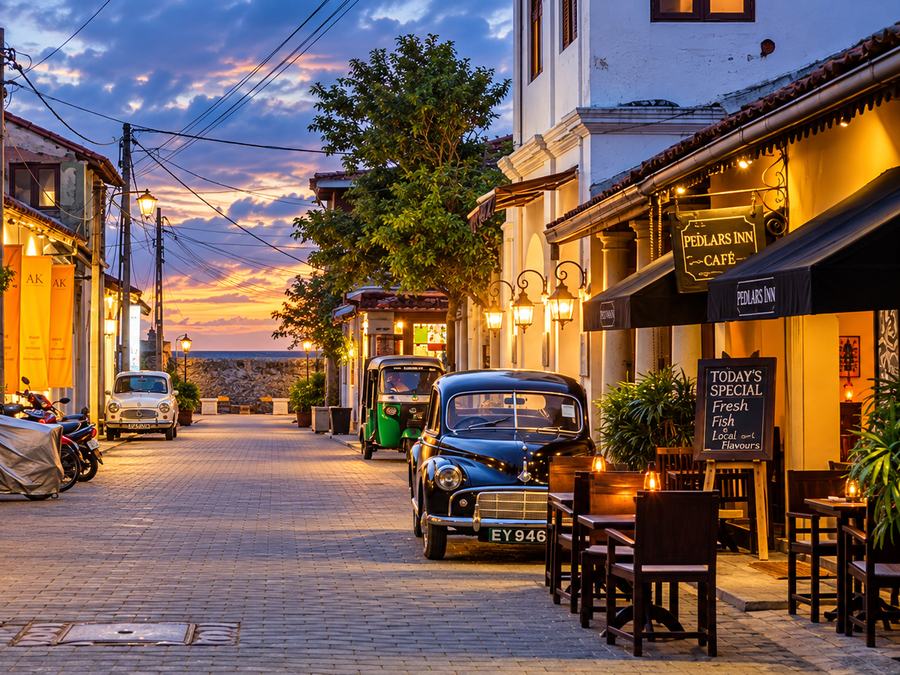
Sleeping inside the walls is the difference between visiting Galle and understanding it. The day trippers leave around five, the light goes gold, and for a few hours the streets are quiet in a way you would not believe if you had only seen the place at two in the afternoon. Then it is a small town again, with dogs and scooters and someone practising scales.
There are more converted Dutch townhouses than there used to be and some are very good. Book ahead in high season; the fort has a finite number of rooms and cannot build more, which is rather the point of it.
Plan around it

Leave a comment