
Heritage
Climbing Sigiriya, and when to do it
A king killed his father, built a palace on top of a two-hundred-metre rock, and lasted eighteen years.
The story is the reason to climb it, and most people arrive without it. Kashyapa took the throne around 477 CE by having his father walled up alive, drove his half-brother into exile in India, and then built himself something between a fortress and a statement on the summit of a granite plug rising two hundred metres out of flat jungle.
He held it for eighteen years. When his brother came back with an army, Kashyapa rode out to meet him, his elephant turned, his troops read it as retreat, and he cut his own throat on the field. The palace became a Buddhist monastery and then was forgotten for most of a thousand years.
Knowing that turns a staircase into a place. Without it you are just climbing a rock in the heat.
Go at seven
This is the single decision that matters. The site opens at seven and there is almost no shade anywhere on the route. By eleven the rock face is genuinely hot to touch, the metal handrails are worse, and the coach parties have arrived.
Seven gives you cool air, low light on the water gardens and a clear run at the stairs. The alternative is around half past two, which gives you softer late light from the summit, but also more people coming down as you go up. The site closes before sunset, so for the sunset itself, climb Pidurangala.
Allow three to four hours. That is not the climb, which takes well under an hour; it is the gardens at the bottom, which most visitors walk straight past and which are the oldest surviving landscaped gardens in Asia.
What the climb is actually like
It goes in stages, and they feel different from one another. The water gardens are flat and ceremonial. Then the boulder gardens, scrambling between house-sized rocks. Then a spiral staircase bolted to the cliff up to the fresco gallery, where the painted women — the cloud maidens — have been looking out over the jungle for fifteen centuries in colours that have no business still being that strong.
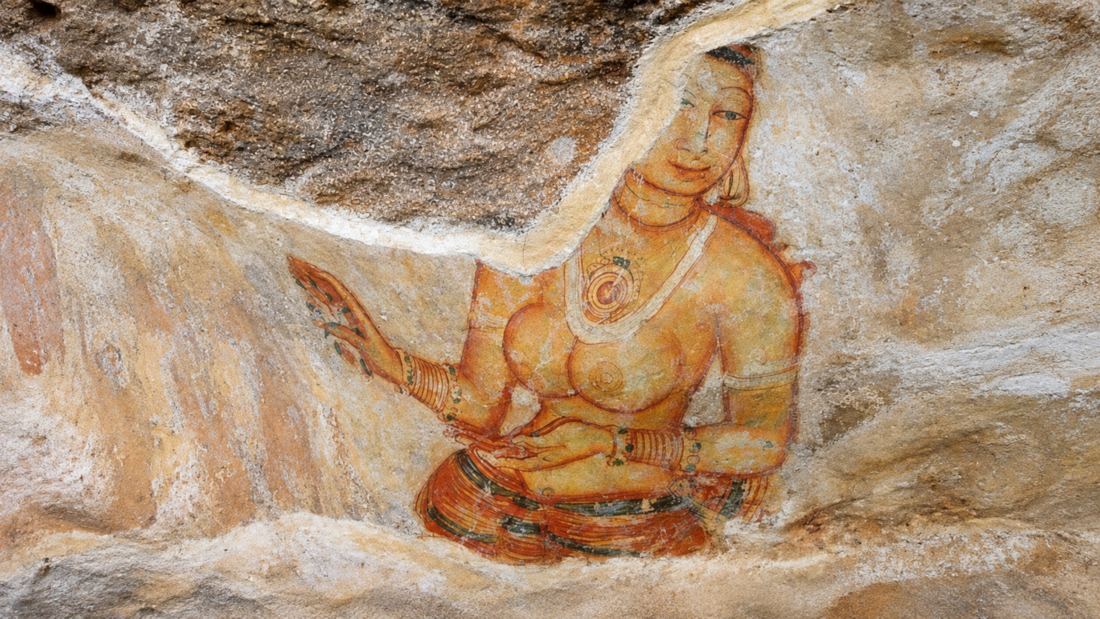
Past them, the mirror wall, polished plaster that once reflected the king and now carries graffiti left by visitors from the eighth century onwards, some of it poetry about the women in the frescoes. Then the terrace with the lion's paws, all that remains of a colossal gateway you were meant to walk into through the mouth.
The last section is the one to know about. Metal stairs bolted to the rock face, fifteen to twenty minutes, exposed, with a substantial drop on one side. There is no way around it. Anyone with basic fitness will manage, but if heights are a genuine problem, this is not the site for you and it is better to know that at the bottom.
The top
Larger than people expect — about a hectare and a half of palace footprint, walls and cisterns and throne platforms spread across the whole summit. The cisterns still hold water when it rains, which is fifteen hundred years of drainage still doing its job.
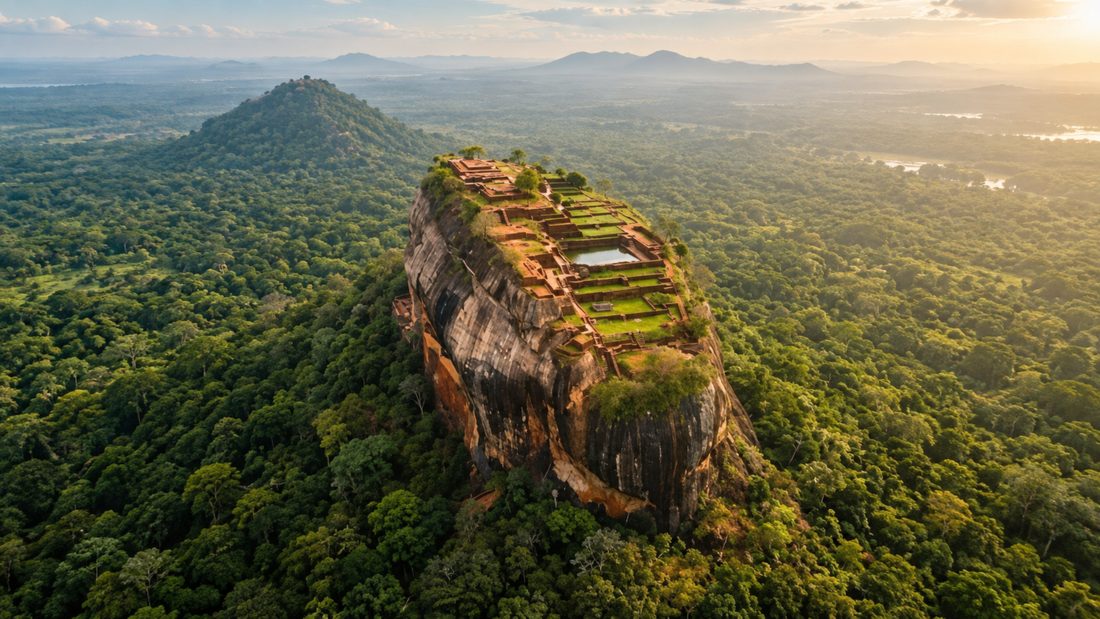
The view is flat jungle to the horizon in every direction. Pidurangala to the north, Dambulla away to the west, the Knuckles range to the south on a clear morning.
The Pidurangala question
Pidurangala is the rock opposite, thirty minutes' walk north, and it costs a fraction of Sigiriya. The climb is shorter, rougher and ends in a genuine scramble over boulders. There is a reclining Buddha at a cave temple on the way up, so cover your shoulders and knees.
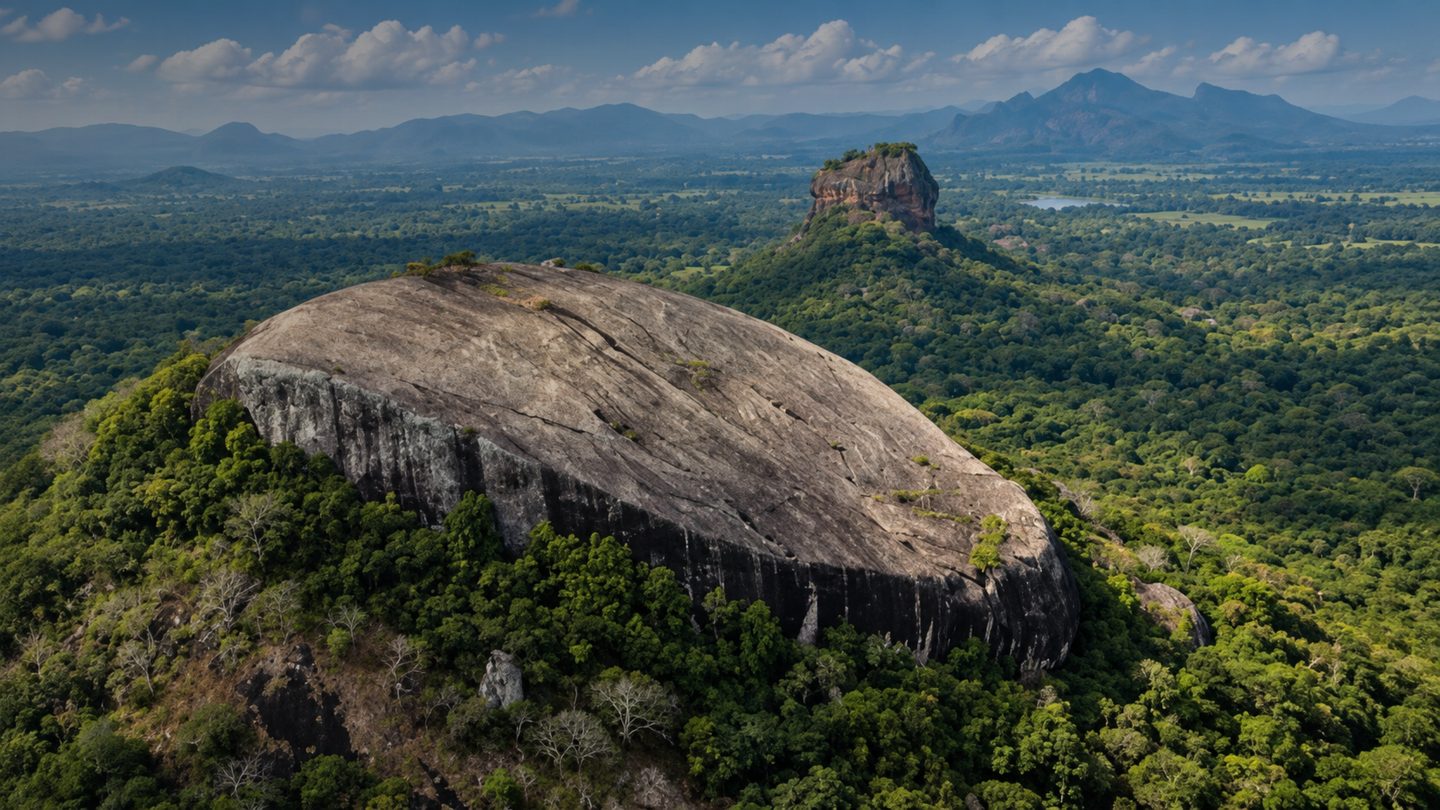
The view from Pidurangala is better, for one reason: it looks at Sigiriya rather than from it. Every photograph you have seen of the rock glowing at sunrise was taken from there.
If you can only do one, do Sigiriya — the history is the point and Pidurangala has none of it. If you have a morning, the local answer is both: Pidurangala at first light for the view, then Sigiriya for the site. It is a lot of stairs in one day and worth it.
Pidurangala for the photograph. Sigiriya for the reason the photograph is worth taking.
Practical things
Tickets are dual-priced, foreigners paying substantially more than Sri Lankans. This is official government policy rather than a scam, and it applies at every major site. Expect about thirty-five US dollars for a non-SAARC adult, quoted in dollars and paid in rupees at the day's rate. Check before you go.
Bring cash. The card machine at the ticket office works when the connection does, which is not always. Bring more water than you think, wear shoes with grip, and bring socks: some of the paving gets hot enough that removing shoes at the shrine sections becomes a problem without them.
Dambulla's cave temples are under twenty kilometres away and are the natural pairing for the rest of the day, though after Sigiriya's stairs most people are glad they are largely horizontal.
One thing worth doing
Take a guide at the ticket office, agree the price first, and pick one who knows the frescoes. The climb is legible without help; the mirror wall graffiti, the hydraulics of the gardens and the sequence Kashyapa intended you to move through are not. It is the difference between a viewpoint and a place someone actually lived.
Plan around it

Leave a comment