
Hill country
The Nine Arch Bridge, Ella
You hear it before you see it. A low horn somewhere in the trees, then the clatter of a blue train edging out of the tunnel and onto nine stone arches high above the tea. For about a minute, the whole hillside goes quiet and every phone in Ella is pointed at the same thing.
The Nine Arch Bridge is the most photographed piece of railway in Sri Lanka, and probably in Asia. It is also, in 2026, a place where timing matters more than ever. The line was badly damaged by Cyclone Ditwah in late 2025, and the trains came back in June. Here is how to see one cross, and where to be when it does.
The short answer
Trains are crossing the bridge again: the line from Nanu Oya through Ella to Badulla reopened on 20 June 2026. There are only a few a day, so check the times locally, arrive half an hour early, and stand on the hillside opposite rather than on the bridge itself.
The bridge, at a glance
| Where | Demodara, about 2.5 km from Ella town |
| Built | Finished in 1921. About 91 m long, around 24 m high, nine arches |
| Trains | Running again since 20 June 2026. A few a day |
| Rough crossing times | Mid-morning and late afternoon. Check locally |
| Getting there | 20–40 minutes on foot, or a short tuk-tuk ride |
When the trains pass
This is the question everyone asks, and the honest answer is: roughly. With the timetable running since the line reopened, trains cross the bridge in two windows. In the morning, around 9.30 to 9.45 and again around 11.30. In the afternoon, around 3.30 and around 5pm.
Treat those as a guide, not a promise. Hill-country trains run late, timetables change, and the Ella Odyssey tourist service runs only on some days. Ask at your hotel or at Ella station the evening before, and get to the bridge half an hour ahead of the time you are given. The waiting is part of it: the light moves across the valley, someone always has a flask of tea, and when the horn sounds the whole hillside stands up at once.
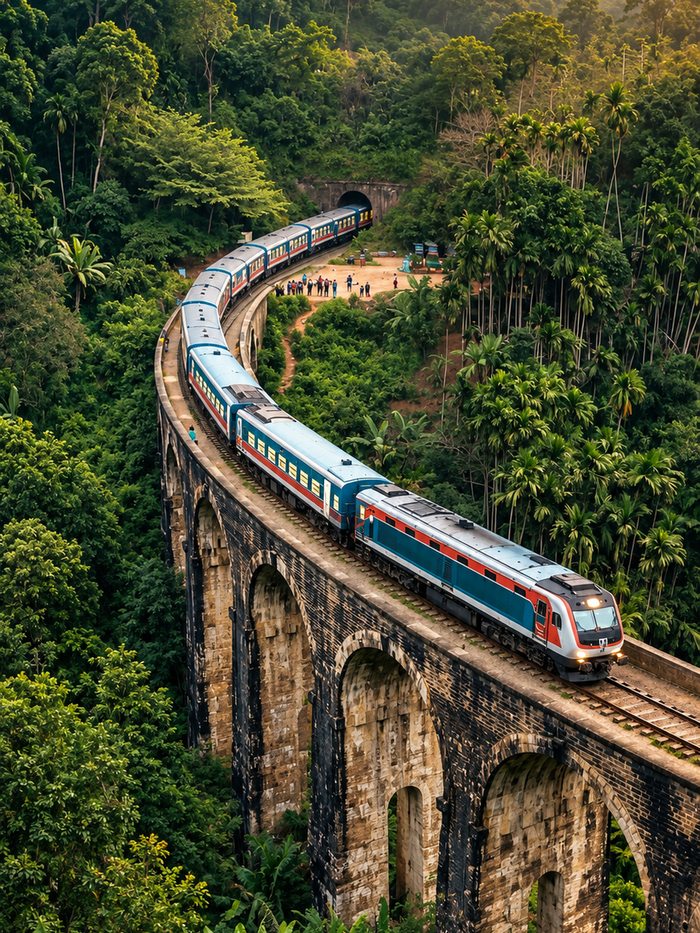
A note on the wider line. You still cannot ride a train all the way from Kandy to Ella. The section from Kandy up to Nanu Oya is under repair, with reopening expected around the end of 2026 or early in 2027. For now, the usual plan is to drive to Nanu Oya and take the scenic train to Ella. The bridge itself is just beyond Ella, on the stretch that runs on to Badulla. The Kandy–Ella train, as it stands →
The waiting is part of it. When the horn sounds, the whole hillside stands up at once.
How to get there
The bridge sits at Demodara, about two and a half kilometres from the centre of Ella. There are two ways to walk it.
By the road. Follow the Passara road out of town and turn off near the Kanaser temple, then take the path down through the trees to the bridge. It is the easier route, and takes 20 to 40 minutes on foot. A tuk-tuk will take you most of the way in a few minutes if the heat is up.
By the line. Many people walk along the railway from Ella station, through the cutting and the tunnel, and arrive at the bridge from above. It is a beautiful walk, but it is a working line: keep to the edge, listen for horns, and do not attempt it in the rain.
Where to stand
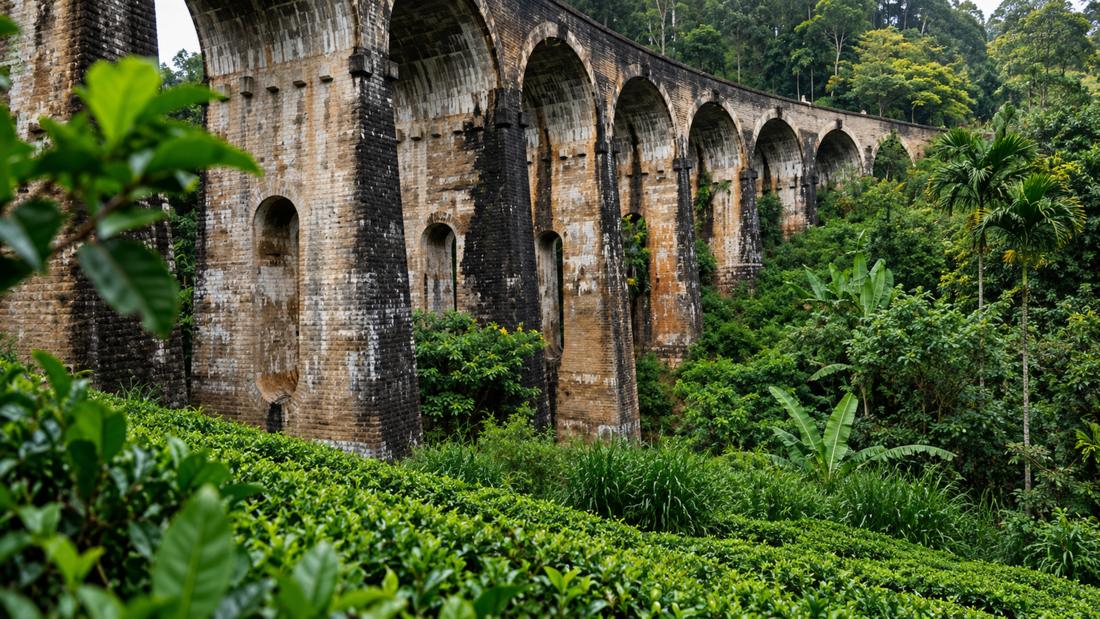
The classic photograph is taken from the hillside opposite the bridge, looking across at the arches with the train side-on. The cafés on the slope above the north end, Asanka Café among them, have the best seats for a long wait with a cold drink. Below the bridge, the tea slopes give the dramatic upward view of the arches, but they are private land, so ask before you walk in.
Between trains, you can walk across the bridge itself and look down into the valley. Step off well before a train is due. When it comes, the view from the hillside is the one you want anyway.
A little history
The bridge was finished in 1921, carrying the line through the steep country between Ella and Demodara. It is about 91 metres long and around 24 metres high, built from stone, brick and cement. The story goes that the steel ordered for it was diverted to the war effort in Europe, so the local builders did without. It has never been proven, but it is the story everyone in Ella will tell you, and the bridge has stood for a century either way.
Just down the line is the Demodara loop, where the railway spirals around a hill and passes under itself, which is one of the finer pieces of colonial engineering on the island.
Making a morning of it
The best day in Ella starts with sunrise on Little Adam’s Peak, then breakfast, then a slow walk to the bridge for the mid-morning train. You are back in town for lunch before the heat. Little Adam’s Peak, at sunrise →
Where to stay nearby
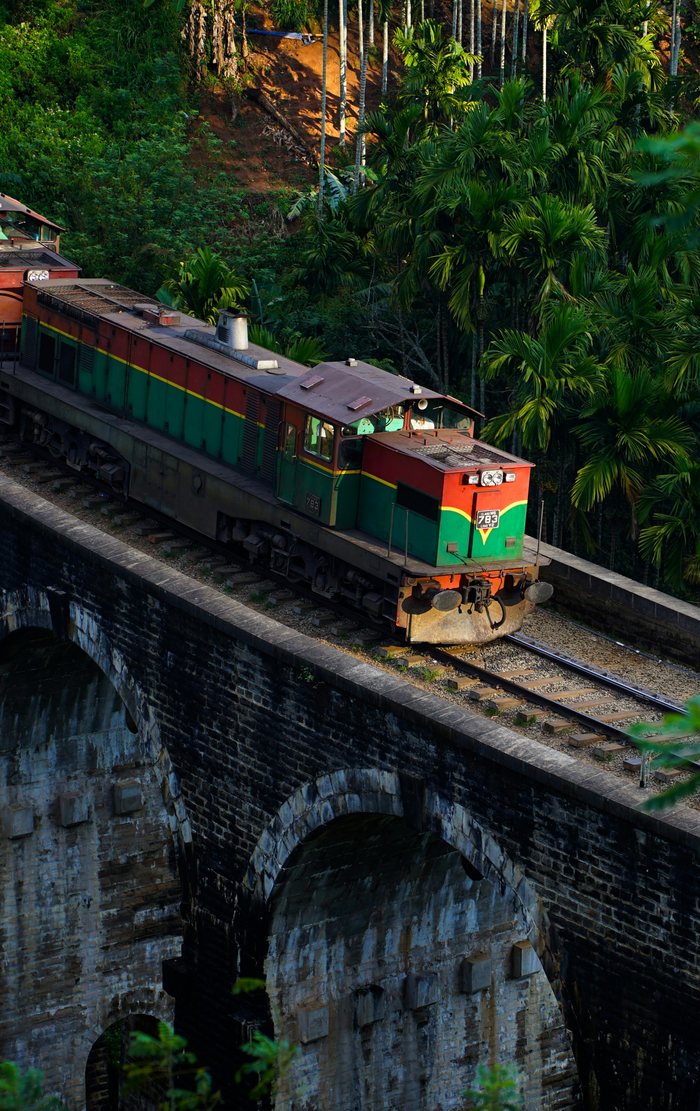
Some of Ella’s best hotels are within reach of the bridge. Nine Skies, a restored planter’s bungalow above the Demodara loop, looks down on the line itself, and EKHO Ella is a short drive from the arches. Where to stay in Ella →
The Pearl Edition designs the route. Our licensed travel partner in Sri Lanka quotes and arranges the trip, including a driver to Nanu Oya for the train. How trips work →
Questions
Are trains running over the Nine Arch Bridge in 2026?
Yes. The line from Nanu Oya through Ella to Badulla, which crosses the Nine Arch Bridge, reopened on 20 June 2026 after Cyclone Ditwah, with a handful of trains each day. The section from Kandy to Nanu Oya is still under repair, with reopening expected around the end of 2026 or early 2027.
What time does the train cross the Nine Arch Bridge?
With the current timetable, trains pass roughly mid-morning (around 9.30 to 9.45 and 11.30) and late afternoon (around 3.30 and 5pm). These are estimates and change with delays and timetable updates, so check locally on the day and arrive half an hour early.
How do you get to the Nine Arch Bridge from Ella?
It is about 2.5 kilometres from Ella town. The easiest way is to walk or take a tuk-tuk along the Passara road and turn off near the Kanaser temple, then follow the path down, which takes 20 to 40 minutes on foot. Some people walk along the railway line from Ella station instead.
Is it safe to walk on the Nine Arch Bridge?
It is a working railway with no barriers. People do walk the tracks between trains, but step well clear at the first sound of a horn, avoid it when the rails are wet, and never stand on the bridge itself when a train is due.
Plan around it
Photography: The Pearl Edition library and Unsplash.

Leave a comment