
Wildlife
How to actually see a leopard at Yala
The park has the highest density of leopards anywhere on earth, and people still come out having seen nothing.
Yala divides people more than any other place in Sri Lanka. Some go, see a leopard within the hour, and call it the best morning of the trip. Others spend a full day inside and come home with photographs of a distant elephant and a lot of dust.
The odds are genuinely good. Block 1 holds roughly one leopard per square kilometre, which is the highest documented density of wild leopards anywhere on earth. The difference between the two experiences is almost never luck. It is timing, block choice, and who is driving.
Understand what you are paying for
A Yala safari is two separate payments and this is where most of the confusion starts. There is a government entry permit, paid at the gate on the day, and there is the private jeep, hired separately. Operators sometimes quote a low jeep price and leave the permit out of the conversation until you are at the gate.
Ask for the all-in figure per person before you book, and ask specifically whether the park fee and taxes are included. A reasonable operator will tell you without hesitating. Fees change, so treat any number you read online — including a figure quoted in an article written months ago — as indicative rather than current.
Ask for the all-in figure. The cheap jeep is rarely the cheap safari.
The blocks
Yala runs to 979 square kilometres but only part of it is open. Block 1 has the highest concentration of wildlife and the highest concentration of jeeps, which is the trade. Block 5 is quieter, the habitat is different, and sightings are less frequent but feel more like wildlife and less like a car park.
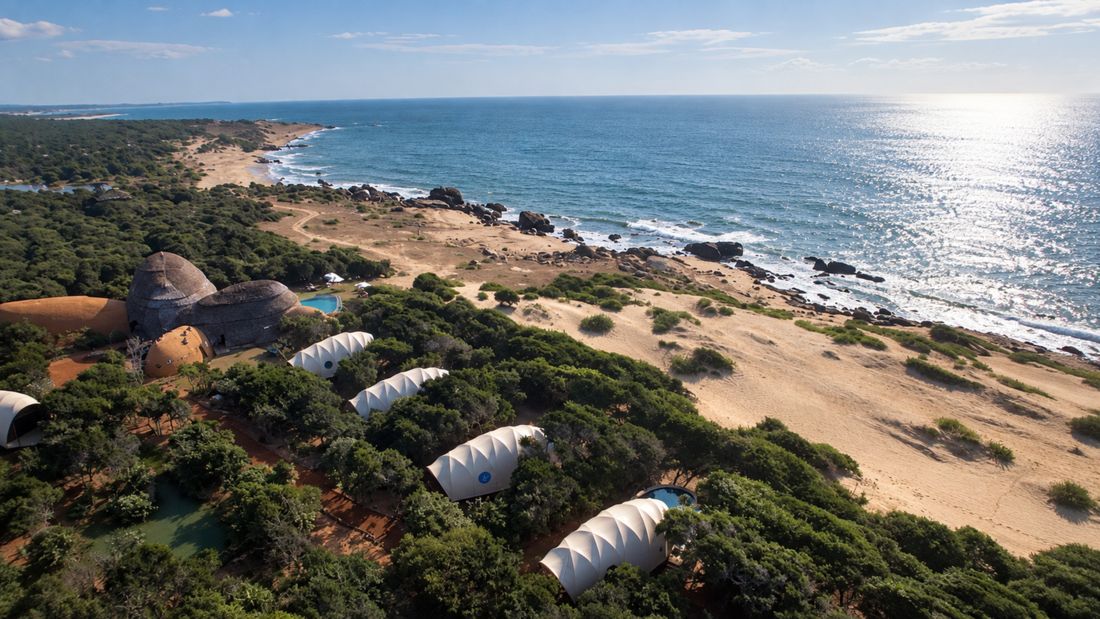
For a first visit, Block 1 in the morning. If you have been before, or you care more about the experience than the photograph, ask about Block 5. If Blocks 1 and 2 are closed — they usually shut for several weeks in September and October, at the height of the drought — Udawalawe is open year-round and is the better park for elephants anyway. In 2026 they closed from 14 September to 15 October.
Timing is most of it
Gates open at six. Being first through them matters more than anything else you can control, because leopards move at the edges of the day and because the first hour is the only hour before the jeep traffic builds. That means a pickup from Tissamaharama at around half past four, which is unpleasant and non-negotiable.
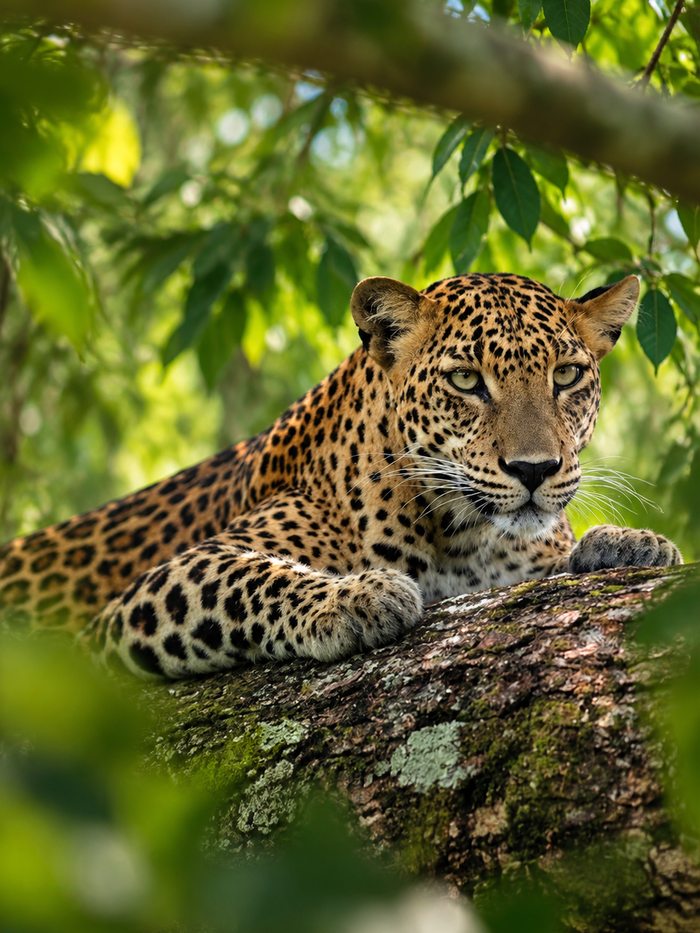
Evening drives work too and are quieter. Midday is close to pointless: the cats are lying up in shade you cannot see into, and you will spend three hours in heat looking at scrub.
What a good driver does differently
This is the variable nobody prices in. A good tracker is not driving around looking for a leopard. He is listening.
Spotted deer give an alarm call when they see a predator — a sharp, repeated bark, quite unlike their other noises. Langurs do the same from the canopy, and because they are higher they often call first. Peacocks join in. A driver who knows the park will stop, cut the engine, and wait, and what he is doing is triangulating: which direction, how close, how recently. Half of a good sighting happens before anyone sees anything.
The other half is knowing where not to be. When a leopard is spotted, the radios go and twenty jeeps converge. The good drivers often go the other way, to where the animal is likely to come out rather than where it currently is.
Half of a good sighting happens before anyone sees anything.
What else is in there
Elephants, in numbers, and unlike the leopards they are not hiding. Sloth bears, which are genuinely rare and worth more excitement than they usually get. Crocodiles in every waterhole. Wild boar, buffalo, spotted deer, sambar. And birds in quantity — Yala is a serious birding site that happens to be marketed on a cat.
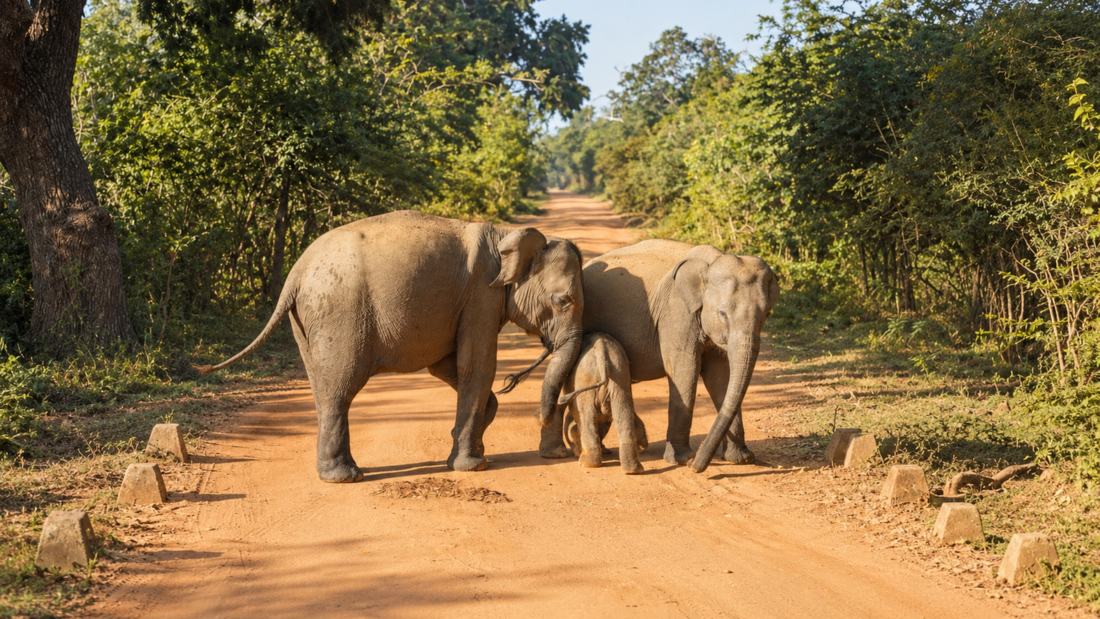
The coastal stretch of Block 1 runs down to the sea, which surprises people. There is a memorial there to those killed when the 2004 tsunami came into the park.
Going in with the right expectation
A morning drive is three or four hours in an open vehicle on rough tracks. It is dusty, it is bright, and for long stretches nothing happens. That is what wildlife watching is, and the people who enjoy Yala most are the ones who came for the whole thing rather than for one animal.
If you specifically want elephants, go to Udawalawe and you will not be disappointed. If you want the gathering, Minneriya between roughly July and September. If you want a leopard, Yala in the first hour after the gate opens, with someone who knows how to listen. It is still not a guarantee. Nothing wild ever is.
A word on how to behave
The pressure on Block 1 is real and the jeep crowding around sightings is worse than it was. Ask your operator to keep distance and to leave when the animal shows signs of being bothered. A good one will do it without being asked, and will tell you why. It costs you a photograph occasionally. It is worth it.
Plan around it

Leave a comment