
Food
Rice and curry is not a dish
The most common mistake is treating it as one thing with side dishes. It is the other way round.
A plate of rice and curry arrives looking like a mistake. There is rice in the middle and then five, seven, sometimes a dozen small dishes around it, none of them large enough to be a portion. The instinct of most visitors is to work through them one at a time, like a tasting menu. That is not how it works.
It is a format, not a recipe. The rice is the constant and everything else is a variable you combine with it, differently with each mouthful. Two spoons of rice, a little dhal, a fragment of pol sambol for heat, some of the green thing for bitterness, a piece of fish. Next mouthful, different proportions. You are composing as you go, and a plate that looks chaotic is actually a set of ingredients arranged for exactly that.
Eating each dish separately is like ordering a chord and playing the notes one at a time.
What is actually on the plate
Rice first. Usually white, often red — the red is nuttier, holds sauce better, and is what most households eat when they are not entertaining. Then a dhal curry, almost always: soft, coconut-rich, mild, the thing that makes everything else work. Something green, often a leaf you will not recognise, usually cooked with grated coconut. A fish or chicken curry if you have ordered one. Pumpkin or ash plantain or jackfruit, depending on season. A crisp element — papadam, or fried sprats, or a fritter.
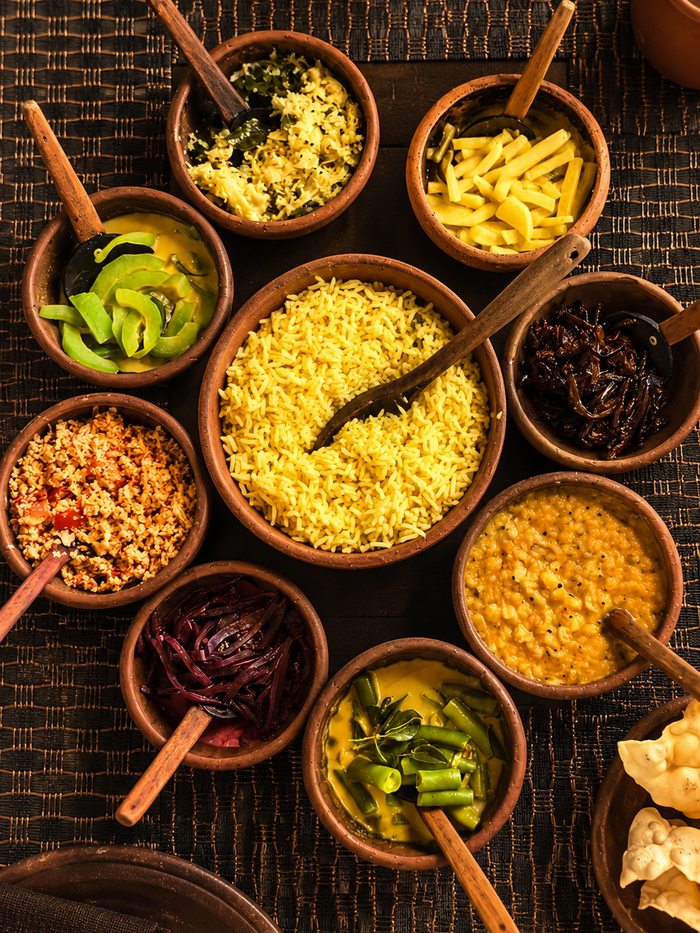
And pol sambol. Grated fresh coconut, chilli, lime, red onion, a little dried fish. It is not a garnish and it is not optional. It is the heat, the salt and the acid all arriving at once, and it is what you reach for when a mouthful is too flat. Ask for extra. Everyone does.
The heat question
Sri Lankan food is hotter than most visitors expect and hotter than Indian food of the same description. It is also not uniformly hot, which is the part people miss — the dhal is mild, the greens are mild, and the heat is concentrated in the sambols and one or two of the curries.
So you regulate it yourself. If a mouthful is too much, more rice and more dhal, not water. Water spreads capsaicin around your mouth; starch and fat absorb it. This is why the plate is arranged the way it is. Nobody will tell you this because to a Sri Lankan it is like explaining how to use a fork.
Where to eat it
The best version is in a home, and if you are offered one, cancel whatever else you had planned. Failing that, the honest answer is that a good roadside place at lunchtime will beat almost any hotel buffet. Rice and curry is a lunch food. It is cooked in the morning, it sits, the flavours settle, and by one o'clock it is at its best. By dinner in a hotel it has usually been reheated into something duller.
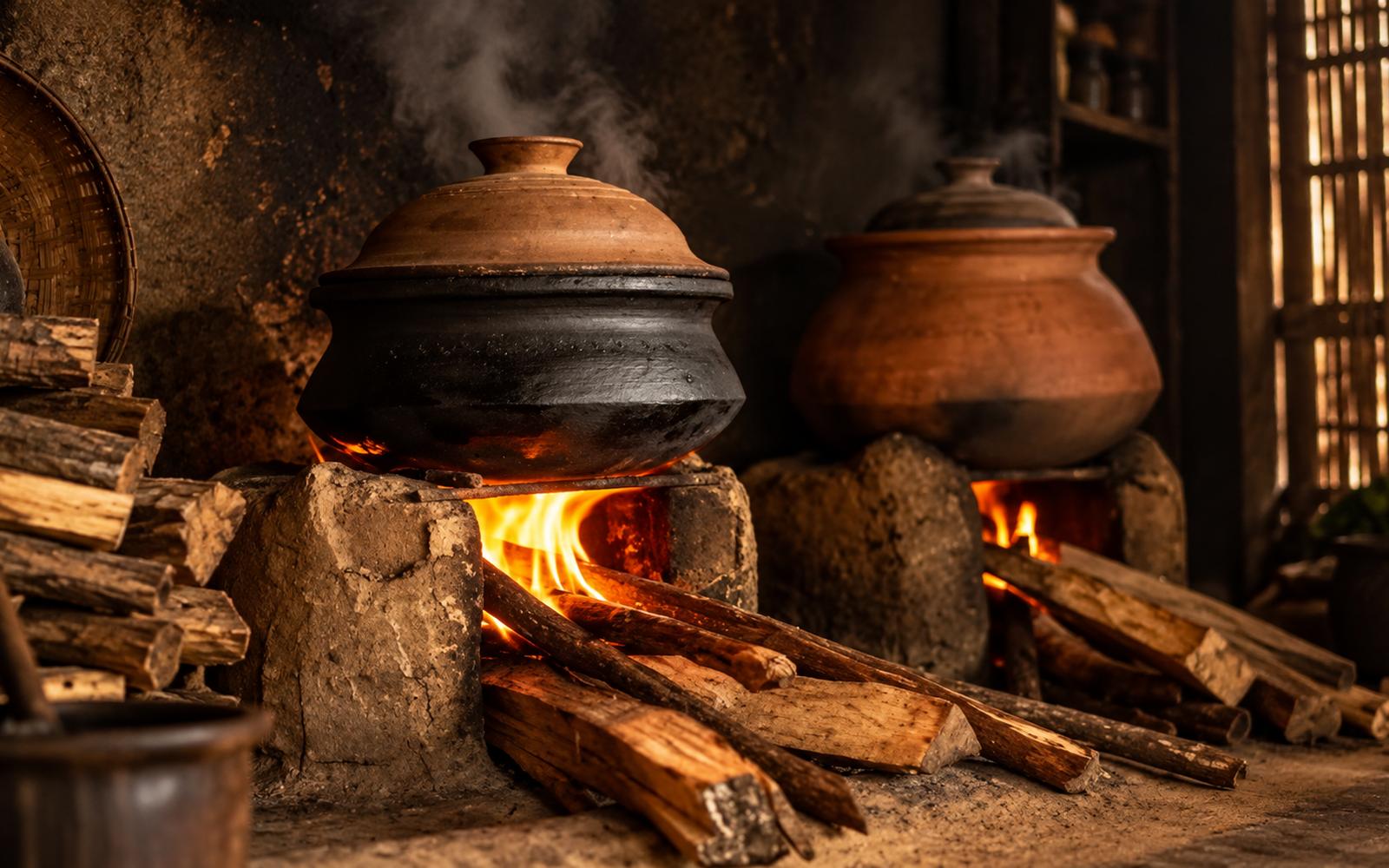
Look for a place that is full of people eating with their hands, that has no menu because there is only one thing, and where the plate arrives without you having ordered. In Colombo the lunch packet — the same food wrapped in paper and eaten at a desk — is how most of the city eats, and it is excellent.
It is a lunch food. Cooked in the morning, best by one o'clock, duller by dinner.
Eating with your hand
Right hand only. You use the fingertips rather than the whole hand, mixing a small amount of rice with whatever you are combining it with, pressing it into a loose ball with the fingers and pushing it into your mouth with the thumb. It takes a meal or two to stop feeling ridiculous.
It is worth doing, and not for the anthropology. Rice and curry is about proportion, and your fingers judge proportion better than a spoon. There is a reason the food evolved alongside the method. Nobody will mind if you use cutlery, and there will be cutlery, but you are eating a slightly different meal.
The things worth going out of your way for
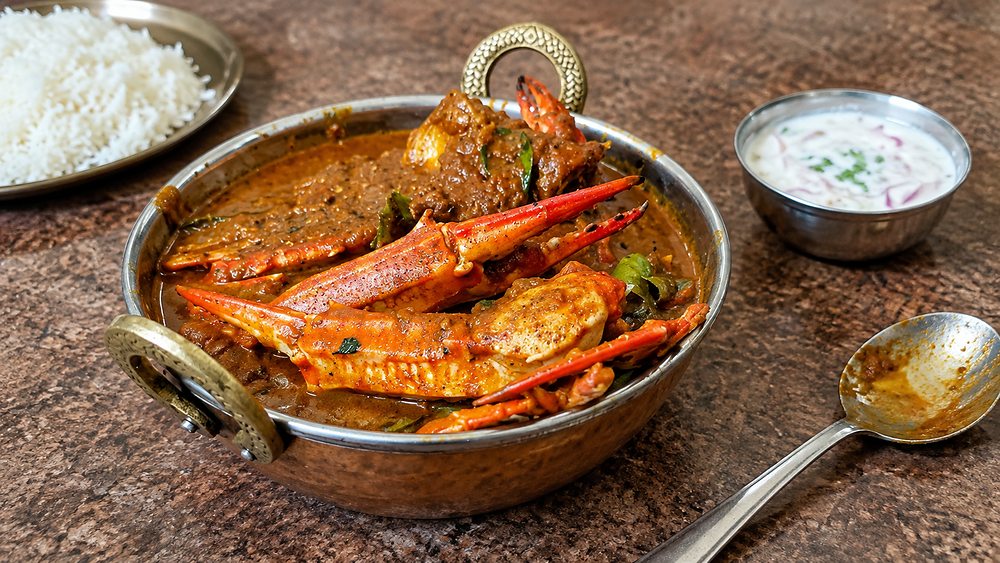
Jaffna crab curry, which is hotter and sourer than anything in the south and cooked with a spice mix that owes more to Tamil Nadu than to Kandy. Ambul thiyal, a dry sour fish curry from the south preserved with goraka, black and intense and unlike anything else on the island. Kool, the Jaffna seafood broth thickened with palmyra flour, which is a project rather than a dish.
And hoppers, which are not rice and curry at all but belong in any account of eating here — a bowl-shaped fermented pancake, crisp at the edge and soft in the middle, with an egg dropped in it if you want. Breakfast or late night, rarely in between.
One thing to ignore
The word curry. It is a colonial convenience that flattens about forty distinct preparations into one English noun, and it tells you nothing about what you are eating. A Sri Lankan cook does not think in curries; they think in what goes with what, and how much coconut milk, and whether it is a dry preparation or a wet one, and which of the roasted or unroasted spice mixes it takes.
You do not need the vocabulary to eat well. But it explains why the plate looks the way it does, and why treating it as a main course with sides misses the point entirely.
Plan around it

Leave a comment