
Cultural triangle
Sigiriya or Pidurangala?
From the top of Pidurangala, just after dawn, you see what the kings saw. Across a sea of forest, the Lion Rock rises sheer and alone, the ruins of a palace on its summit catching the first light. It is the view on every postcard, and you can only have it from here.
Sigiriya and Pidurangala stand two kilometres apart in the cultural triangle, and nearly everyone who comes asks the same question: which one? The answer depends on what you came for. Here is how to choose, and why the best answer is often both.
The short answer
Sigiriya is the fortress: the history, the frescoes, the palace on the summit. Pidurangala is the view of the fortress, and the better sunrise. With one morning, choose Sigiriya for history or Pidurangala for the view. With a full day, climb Pidurangala at sunrise and Sigiriya straight after.
Two rocks, compared
| Sigiriya | Pidurangala | |
|---|---|---|
| What it is | A fifth-century rock fortress | A temple rock with the view of Sigiriya |
| Entry | US$35 (US$20 half ticket) | About LKR 1,000 |
| Climb | About 1,200 steps, 1–2 hours up | 30–45 minutes, ends in a scramble |
| Open | Early morning to about 5pm | From about 5am |
| Best for | History, frescoes, the summit ruins | Sunrise, sunset, the photograph |
Sigiriya: the fortress
In the fifth century, King Kasyapa built his palace on the top of a rock that rises nearly two hundred metres from the plain, with water gardens at its feet and a gateway shaped like a lion. What remains is extraordinary. You climb past the painted maidens of the frescoes, still vivid after fifteen centuries, along the polished Mirror Wall scratched with the poems of ancient visitors, and up through the giant stone paws of the Lion Gate to the ruins of the palace on the summit.
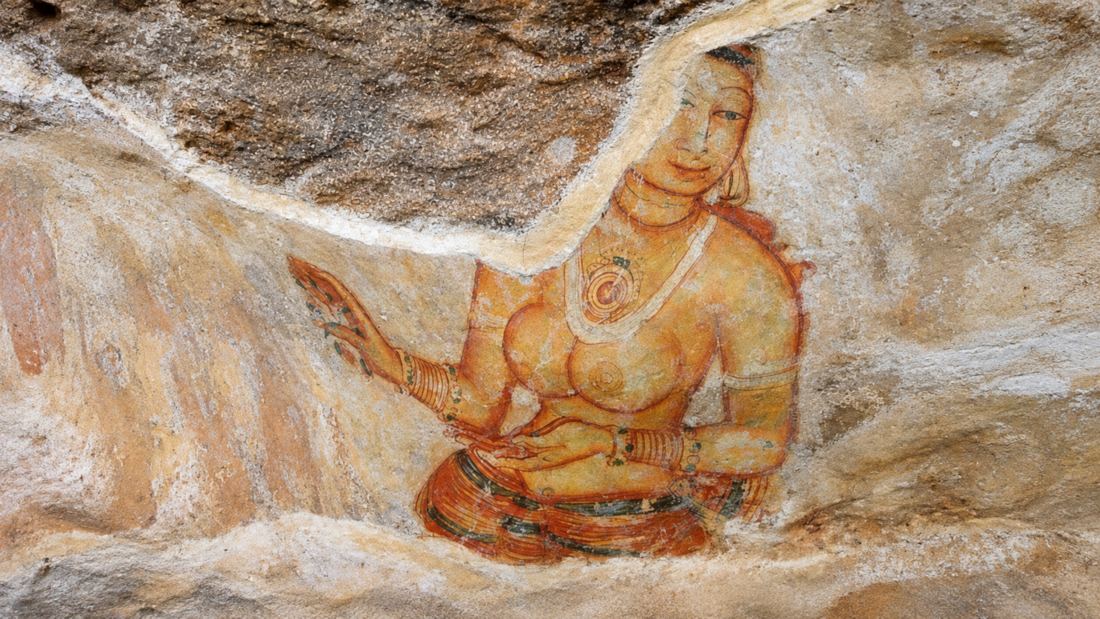
Tickets cost US$35 for foreign adults, paid in rupees, with a half ticket of US$20 for SAARC nationals and children. Buy at the counter or online through the Central Cultural Fund. Go at opening time, from around 6.30 or 7am, before the heat and the tour buses. The climb is about 1,200 steps and takes one to two hours up; allow around three hours in all. Climbing Sigiriya, step by step →
Sigiriya is the fortress. Pidurangala is the only place you can see it from.
Pidurangala: the view
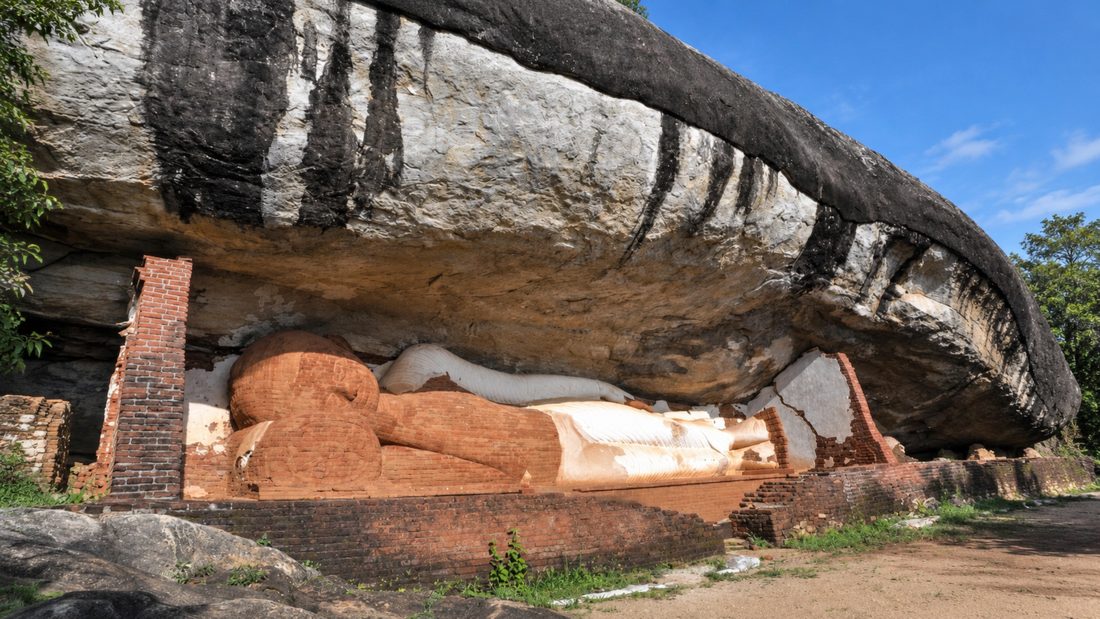
Pidurangala is rougher, simpler and a great deal quieter. The path climbs through a working Buddhist temple, past a great reclining Buddha in brick beneath an overhang, and up through the forest. The last few minutes are a scramble over boulders, using your hands. Then you come out on a wide, flat summit, and there, across the forest, is Sigiriya.
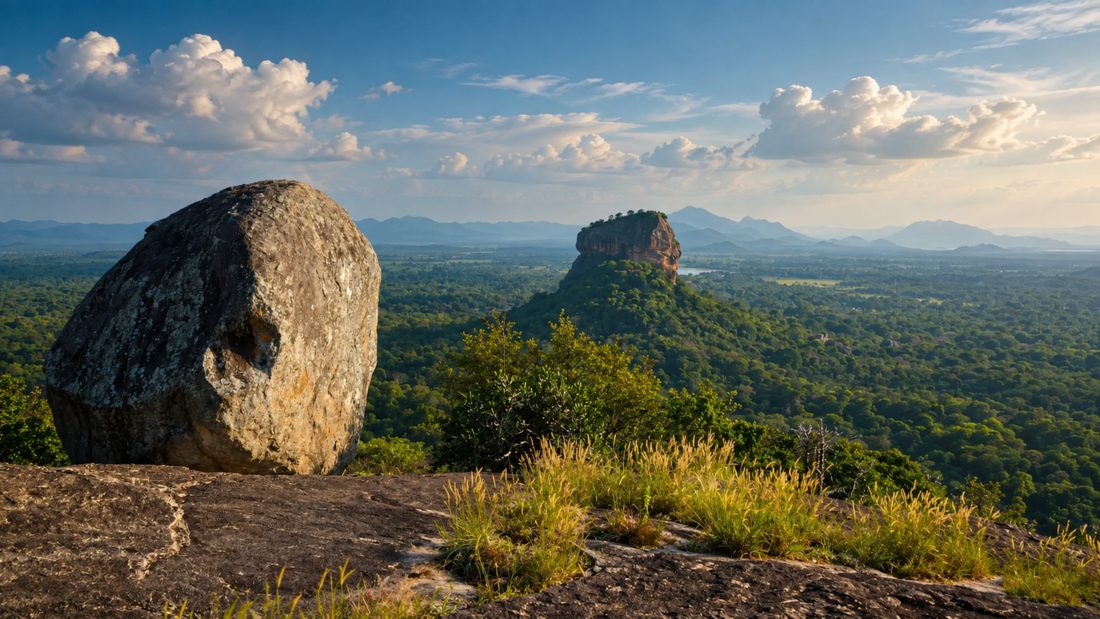
The temple fee is about LKR 1,000, and the climb takes 30 to 45 minutes. For sunrise, start from the bottom by about 5.15am with a torch. For sunset, arrive early, find a place on the rock, and leave enough light to come back down the scramble safely.
Doing both in a day
This is the plan we would follow. Climb Pidurangala for sunrise. Come down, have breakfast, then be at Sigiriya’s gate soon after it opens and climb the fortress while it is still cool. You are finished by late morning, with the afternoon free for the pool or the cave temples at Dambulla.
Practical notes
Wear proper shoes for Pidurangala’s scramble. Cover shoulders and knees at the temple. Take water for both, and a torch for any climb before dawn. If you are nervous of heights, Sigiriya’s final staircase is exposed but caged, and Pidurangala’s boulders are short but awkward.
Stay close by and the early starts are easy. Jetwing Vil Uyana, built over a restored wetland, is our pick in the area. Sigiriya: where to stay and what to do →
The Pearl Edition designs the route. Our licensed travel partner in Sri Lanka quotes and arranges the trip. How trips work →
Questions
Should I climb Sigiriya or Pidurangala?
Climb Sigiriya for the history: the frescoes, the Lion Gate and the ruins of a fifth-century palace on the summit. Climb Pidurangala for the view, because it is the only place you can see Sigiriya itself rising from the forest. With a full day, do both: Pidurangala at sunrise and Sigiriya after.
How much does it cost to climb Sigiriya in 2026?
The full ticket for foreign adults is US$35, paid in rupees, and a half ticket of US$20 applies to SAARC nationals and children. Tickets can be bought at the counter or online through the Central Cultural Fund.
How much is Pidurangala entry?
There is a temple fee of about LKR 1,000. The climb takes 30 to 45 minutes and ends with a short scramble over boulders.
Can you climb Sigiriya at sunrise?
Not quite. Sigiriya opens in the early morning, from around 6.30 or 7am, so go at opening time for the coolest climb. For a true sunrise, climb Pidurangala, which opens from around 5am.
Plan around it
Photography: The Pearl Edition library and Unsplash.

Leave a comment